
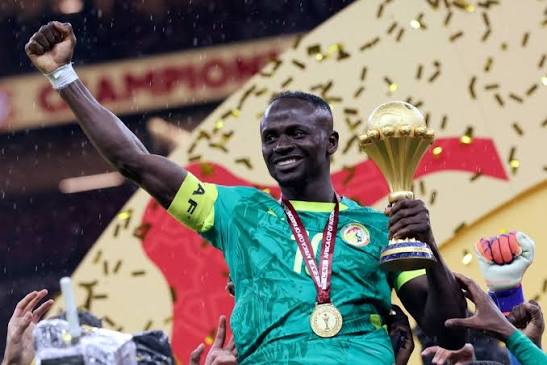
Before the Africa Cup of Nations final, Sadio Mané spoke with CAF Media about leadership, legacy, and how he wished to be remembered. “I’ve never wanted to be remembered only as a great footballer,” he said. “I want to be remembered as a great human being. For me, that is far more important.” On Sunday night in Rabat, Mané’s words became action.
Senegal’s 1–0 extra-time victory over hosts Morocco will be remembered for its drama: a disallowed goal, a late VAR-awarded penalty, a walk-off, a missed Panenka, and a stunning winner from Pape Gueye. At the heart of the storm was Mané, whose composure and guidance prevented Senegal’s protest from becoming a stain on African football’s premier stage.
Late in injury time, a penalty awarded to Morocco infuriated the Senegal bench.
Acting on instructions from head coach Pape Thiaw, Senegal’s players walked off the pitch in protest. Tensions escalated as the match was halted for nearly fifteen minutes, compounded by an earlier disallowed goal and ongoing frustration over logistical issues during the team’s relocation from Tangier to Rabat.
Recognizing the stakes, Mané took responsibility. He gestured to his teammates, urging them to return and continue the game. Following discussions with African football icons Claude Le Roy, El Hadji Diouf, and Mamadou Niang, he persuaded the team to resume play.
Brahim Díaz’s Panenka was saved by Édouard Mendy, sending the match into extra time, where Pape Gueye scored the decisive goal to secure Senegal’s second AFCON crown.
Reflecting afterward, Mané said, “Personally, I don’t think it was a penalty, but if the referee decides, you have to respect it. The most important thing is the people watching. It would not have been fair to stop the game like that. I would rather lose than see something like that happen to our game.”
Coach Thiaw later acknowledged his error in ordering the walk-off, apologizing for the momentary lapse in judgment.
At the trophy ceremony, Mané was lifted by his teammates to hoist the AFCON trophy, despite not being the captain — a role held by Kalidou Koulibaly, with Idrissa Gana Gueye as vice-captain. Gueye passed the armband to Mané, symbolizing that leadership is defined by influence, not title.
Mané described the final as a moment to give everything: “This match could be my last in the AFCON. There was no tomorrow, no day after tomorrow, it was today. I had to give everything.”
Celebrations in the dressing room highlighted Mané’s impact, with Senegalese-French actor Omar Sy and Senegalese-American singer Akon congratulating him personally. Six months from now, Mané is expected to conclude his international career at the 2026 World Cup, but his legacy was already secured before the final whistle in Rabat.
On a night when protest threatened to dominate the narrative, Sadio Mané ensured that leadership and responsibility defined the story instead.



0 Comments