by Emmanuel Atanga | Jan 15, 2026 | AFCON, Africa, Soccer
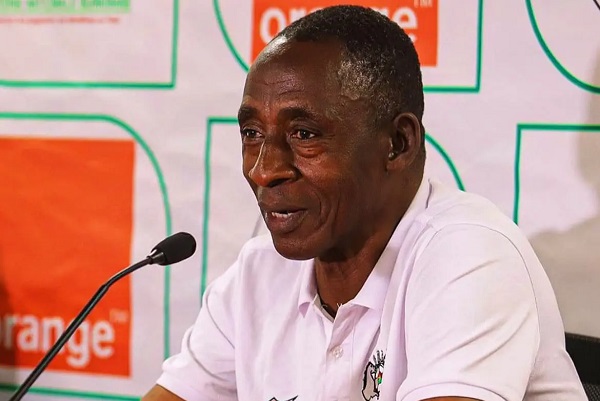
Burkina Faso have dismissed head coach Brama Traore and his entire backroom staff following their disappointing exit at the 2025 Africa Cup of Nations in Morocco.
The decision was confirmed by the Burkina Faso Football Federation (FBF), which said the team’s performance fell well short of pre-tournament expectations. The Stallions had set their sights on reaching the semi-finals but were thrashed 3–0 by defending champions Ivory Coast in the round of 16.
“This poor performance has caused deep disappointment among supporters, stakeholders in national football, and governing bodies,” FBF president Oumarou Sawadogo said in a statement.
Traore, 63, was appointed in March 2024, taking over from Frenchman Hubert Velud after Burkina Faso’s last-16 elimination at the 2023 AFCON. His tenure has now come to an abrupt end following a similar outcome.
Mali FA rocked by resignations
Elsewhere in West African football, Mali’s Football Federation (FEMAFOOT) has been thrown into turmoil after 10 members of its 19-man executive committee resigned, triggering a leadership crisis.
The resignations came despite the Malian Eagles reaching the quarter-finals at AFCON 2025 — a result that matched their performance at the previous edition in Côte d’Ivoire.
FEMAFOOT, however, has been quick to dismiss speculation that head coach Tom Saintfiet is also facing the axe.
“[He] has not been dismissed, and no decision has been taken in that regard,” communications officer Ladji Kone told BBC Sport Africa.
FEMAFOOT president Mamatou Toure, popularly known as Bavieux, was not among those who stepped down. Bavieux was re-elected in April 2023 while in detention over alleged corruption charges and was released in April 2025 after spending 622 days in prison.
According to sources close to the federation, the crisis stems from prolonged administrative dysfunction and internal tensions rather than on-field results.
Saintfiet, who took charge of Mali in September 2024, distanced himself from the political turmoil.
“I am in Belgium, I am not following what is happening on the internet,” the 52-year-old said. “I coached Mali to the quarter-final for the second time in a row — that is the only thing I can say.
“What kind of politics is going on, I don’t know.”
by Emmanuel Atanga | Jan 15, 2026 | AFCON, Africa, Nigeria, Soccer
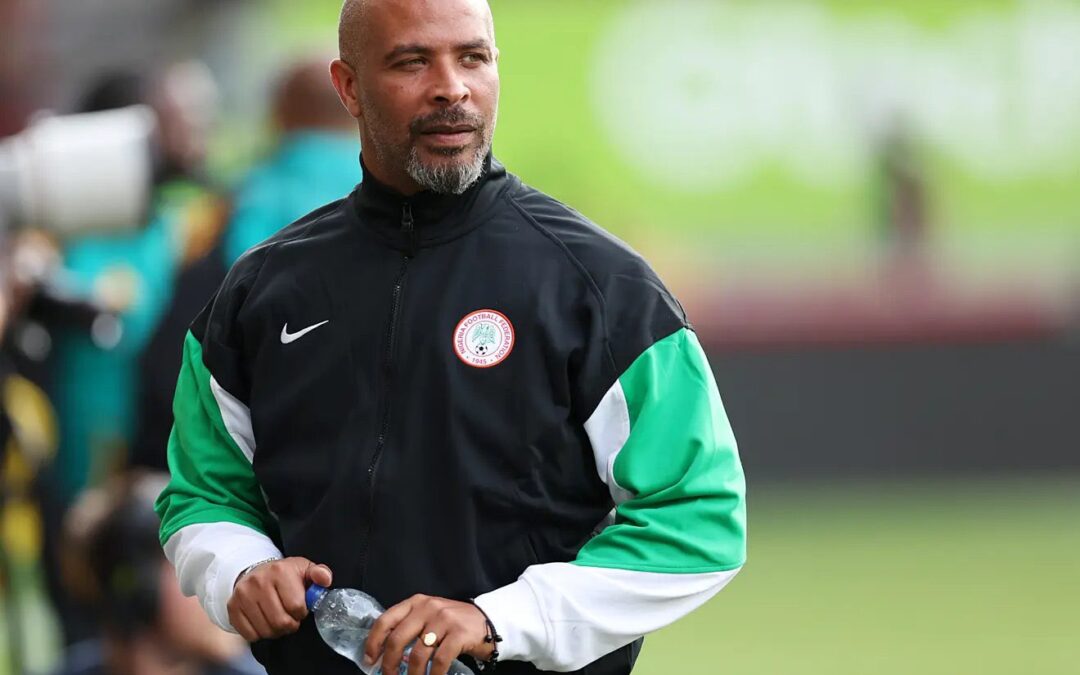
Former Nigeria international Jide Olugbodi has called on the Nigeria Football Federation (NFF) to retain Eric Chelle as head coach of the Super Eagles, insisting the Malian has laid a strong foundation for the team’s future.
Nigeria bowed out of the AFCON 2025 tournament after a 4–2 penalty shootout defeat to hosts Morocco in Wednesday night’s semi-final. Despite missing out on the final, the Super Eagles earned widespread praise for their overall performances throughout the competition.
Chelle, who took charge less than a year ago, has been widely credited with revitalising the team and restoring belief, organisation, and competitiveness. His impact has not gone unnoticed, with reports linking the former Mali international to interest from several African nations.
Olugbodi believes the NFF must act decisively to secure Chelle’s services and ensure continuity.
“It’s important for the NFF to make sure Chelle remains in charge of the Super Eagles,” Olugbodi told AIT. “From competent sources, there is interest in him from a number of African countries.
“We have seen what he has done with the Super Eagles in less than a year now. The future of the team is bright under him.”
With Nigeria showing renewed promise on the continental stage, calls are growing for stability and long-term planning as the Super Eagles look beyond AFCON 2025.
by Emmanuel Atanga | Jan 15, 2026 | AFCON, Africa, Soccer
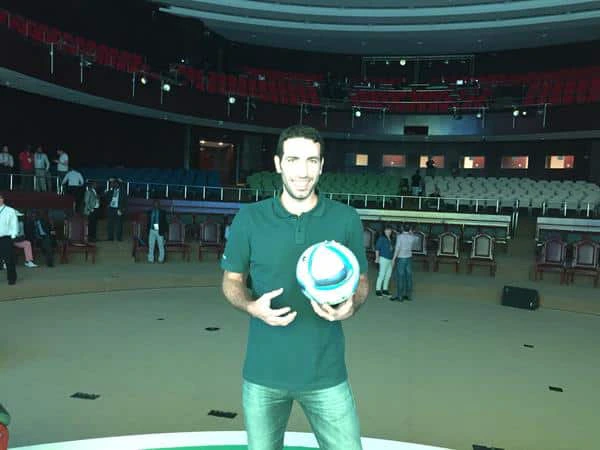
Mohamed Aboutrika is not known for empty praise, which is why his glowing assessment of Yassine Bounou has resonated so strongly as the tournament reaches its decisive stage. The former Egypt and Al Ahly legend has identified the Moroccan goalkeeper as the benchmark for modern goalkeeping, describing him as the player setting the tone for excellence between the posts.
“Yassine Bounou is a school in himself,” Aboutrika said, portraying the Morocco shot-stopper as a living blueprint of the role. In his view, Bounou embodies everything elite goalkeeping demands — composure under pressure, authority in organisation, and the ability to deliver in moments that define tournaments.
Aboutrika pointed to Bounou’s stunning reflex stop, already being hailed as one of the saves of the competition, as evidence of a goalkeeper built for the biggest stages. But his admiration goes far beyond a single moment of brilliance.
According to Aboutrika, championships are often won from the back, with a goalkeeper capable of guiding a team through fear, fatigue and uncertainty.
Bounou, he argues, has repeatedly shown that quality, offering calm assurance to his defenders and belief to teammates further forward. In the fine margins of knockout football, that presence can be the difference between potential and silverware.
Perhaps most telling was Aboutrika’s conclusion. For all that Bounou has already delivered, the Egyptian great believes the Moroccan star has yet to reach his peak.
“The best,” he insists, “is still to come.”

by Emmanuel Atanga | Jan 15, 2026 | AFCON, Africa, International, Nigeria, Soccer, World Cup
African women’s football is poised to reach a defining moment on 15 January, when the draw for the TotalEnergies CAF Women’s Africa Cup of Nations (WAFCON) Morocco 2026 officially sets the stage for a landmark tournament.
For the first time in the competition’s history, 16 nations will compete at the finals — an expansion from 12 teams that underlines the rapid growth of the women’s game across the continent. The finals will be hosted by Morocco from 17 March to 3 April, but the journey toward continental glory effectively begins with the draw.
World Cup qualification raises the stakes
Beyond continental honours, WAFCON 2026 carries enormous global significance as Africa’s qualification pathway to the 2027 FIFA Women’s World Cup. The equation is simple: reach the semi-finals and secure a World Cup ticket.
That added incentive ensures that every group-stage match will be fiercely contested. A favourable draw could ease the route, while a tough group may demand immediate excellence. With African teams no longer content with merely participating on the world stage, expectations have shifted toward consistency and progress.
Banyana Banyana eye redemption
South Africa head into the draw with unfinished business. At the last WAFCON finals in Morocco, Banyana Banyana finished fourth, losing the bronze-medal match to Ghana on penalties — a narrow miss that still resonates.
Their strong showing should place them among the seeded teams alongside hosts Morocco, Nigeria, and Ghana, offering both confidence and motivation. For South Africa, this tournament represents a chance to convert momentum into medals and global qualification.
Nigeria remain the gold standard
Any WAFCON discussion inevitably starts with Nigeria. The Super Falcons, defending champions after lifting a record-extending 10th title at WAFCON 2025, continue to set the benchmark despite a narrowing competitive gap.
Drawing Nigeria early remains a daunting prospect for emerging sides and a defining test for fellow title contenders.
Cosafa’s rising influence
The presence of South Africa, Zambia, and Malawi highlights the growing impact of the Cosafa region on African women’s football. Zambia’s recent rise has been one of the continent’s most compelling stories, while Malawi’s qualification reflects steady development and improved structures.
Together, they signal a shift toward greater regional balance and depth.
A competitive and diverse field
The list of qualified teams reflects a continent on the rise. Alongside the seeded nations are Algeria, Burkina Faso, Cameroon, Cape Verde, Ivory Coast, Egypt, Kenya, Mali, Senegal, and Tanzania — a mix of experience, ambition, and contrasting football identities.
The journey begins
When the draw is made on 15 January, potential paths will become clear, rivalries will be ignited, and ambitions sharpened. For Africa’s women’s teams, WAFCON 2026 is no longer just about taking part — it is about competing, qualifying, and proving that continental success can translate to the global stage.
From that moment, the race to the semi-finals — and the World Cup — truly begins.
by Emmanuel Atanga | Jan 15, 2026 | AFCON, Africa, Soccer
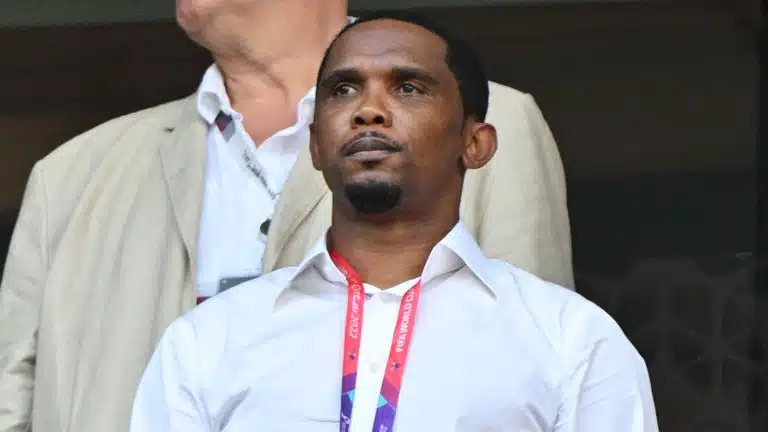
Cameroon Football Federation president Samuel Eto’o has been suspended for four matches and fined $20,000 by the Confederation of African Football (CAF) following incidents linked to Cameroon’s quarter-final defeat to Morocco at the Africa Cup of Nations.
In a statement released on Wednesday, FECAFOOT confirmed receipt of the disciplinary ruling but expressed strong reservations about the process that led to the sanction.
“FECAFOOT further notes that the expedited procedure leading to this decision raises serious concerns regarding the fundamental requirements of a fair trial,” the statement read, adding that the decision “lacks any explicit justification.”
CAF’s disciplinary action followed Cameroon’s 2–0 loss to Morocco in the quarter-finals. Although CAF initially announced investigations into incidents from both the Cameroon–Morocco and Algeria–Nigeria matches without specifying offences, focus soon shifted to Eto’o’s conduct during the game.
Television footage showed the former Cameroon captain reacting angrily in the stands to a controversial moment involving forward Bryan Mbeumo. Eto’o was also seen gesturing towards Moroccan FA president Fouzi Lekjaa from the official tribune, with CAF president Patrice Motsepe seated nearby.
The four-match suspension will prevent Eto’o from attending Cameroon’s next official CAF fixtures, while the fine — equivalent to roughly 11 million CFA francs — adds to his growing list of disciplinary sanctions.
Reacting from Yaoundé, FECAFOOT reiterated its support for Eto’o and hinted at possible legal action.
“FECAFOOT reaffirms its unwavering support for its president and its commitment to upholding the principles governing credible disciplinary justice,” the federation stated, noting that all available legal options would be explored within the stipulated timelines.
The latest ban compounds Eto’o’s recent troubles. In September 2024, FIFA imposed a six-month suspension on the former Barcelona and Inter Milan star, barring him from attending all international matches involving Cameroon’s national teams until March 31, 2025.