by Emmanuel Atanga | Sep 22, 2025 | Africa, Europe, International, Soccer
Andre Onana’s loan spell at Trabzonspor is only two games old, but the Manchester United goalkeeper is already earning glowing praise from the Turkish press.
The 29-year-old Cameroonian, who joined the Süper Lig club for the rest of the season after slipping down the pecking order at Old Trafford, has impressed in back-to-back performances. Onana’s United exit followed a tough spell under new manager Ruben Amorim, who preferred Altay Bayındır in the Premier League and even signed Senne Lammens from Royal Antwerp to strengthen competition.
Onana’s United career included 102 appearances and an FA Cup triumph after his £43.8 million move from Inter Milan in 2023, but his final game—a Carabao Cup draw with Grimsby Town marred by errors—seemed to signal the end of his time as first choice.
In Turkey, however, he has quickly rebuilt his reputation. He claimed player-of-the-match honours on his debut despite Trabzonspor’s 1–0 defeat to Fenerbahçe, facing former Manchester City keeper Ederson. Days later, he added an assist for Paul Onuachu’s equaliser in a gritty 1–1 draw with Gaziantep, showcasing not only sharp reflexes but also the ball-playing skills that once made him a marquee signing.
Local outlets have been effusive. Fanatik hailed his resilience after Trabzonspor were reduced to ten men, noting that his saves “made one forget his dark days at United.” Taka Gazete praised the confidence he exuded, while Milliyet labeled him the “star of the match,” highlighting his experience and composure.
With his Old Trafford contract running until 2028, Onana’s long-term future remains uncertain. But for now, his early heroics in Trabzon offer a timely reminder of the talent that once commanded a hefty fee and high expectations.
by Emmanuel Atanga | Sep 21, 2025 | Africa, International, Nigeria, Soccer, World Cup
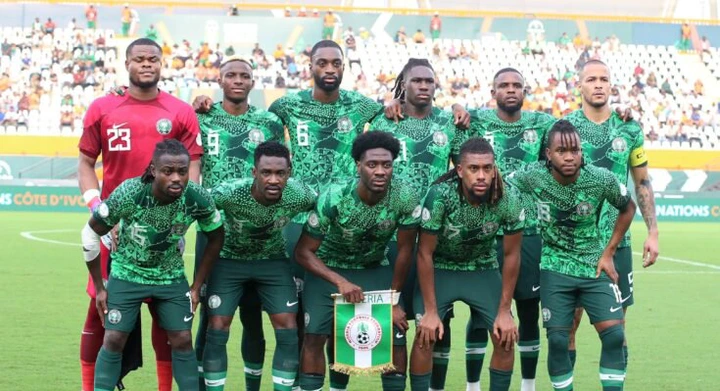
Imo State’s Commissioner for Niger-Delta Affairs, Dr. Henry Okafor, has voiced strong confidence in the Super Eagles’ ability to reach the 2026 FIFA World Cup in the United States, Canada, and Mexico—even if they finish second in their qualifying group.
Speaking on Nigeria’s campaign, Okafor, a lifelong football enthusiast, said the team must win its remaining two qualifiers to secure a favorable play-off berth. He argued that the intercontinental play-off stage would be “very easy” for Nigeria, noting that the Eagles tend to perform better against non-African opponents, whose style of play is less physically demanding than that of many African teams.
Okafor added that recent developments—such as possible point deductions for a rival team facing player-eligibility issues similar to South Africa’s—could further boost Nigeria’s chances. He remains confident the Eagles can capitalize if South Africa stumble against Rwanda.
However, the commissioner criticized the Nigeria Football Federation (NFF) for interfering with squad selection, alleging that unfit players were imposed on the coaching crew at the start of the campaign, leading to poor early results. He urged that only in-form players capable of blending well should be invited for the remaining fixtures.
Okafor called on the government to appoint experienced former players with proven administrative skills to guide the sport’s development, insisting that Nigeria’s football future depends on leadership with both technical know-how and genuine passion for the game.
by Emmanuel Atanga | Sep 21, 2025 | Africa, Athletics, Ghana
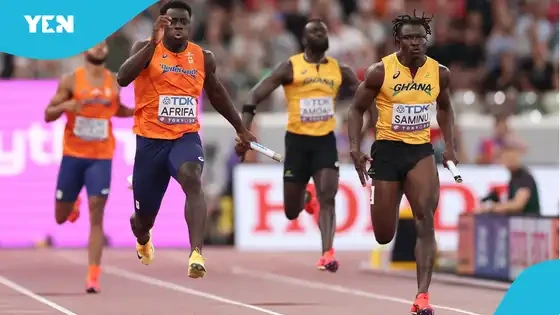
Ghana’s men’s 4x100m relay team walked off the track at the 2025 World Athletics Championships with heads held high and hearts still racing, even as a historic medal slipped away by the narrowest of margins.
The quartet—Joseph Paul Amoah, Benjamin Azamati, Abdul Rasheed Saminu, and Fuseini—had arrived in Tokyo as genuine contenders after blazing through the heats with the fastest overall time. Under the floodlights of the National Stadium, the atmosphere was electric as Fuseini crouched in the starting blocks for Ghana’s opening leg.
He powered through in 10.55 seconds before handing the baton to Azamati, whose blistering 8.96-second burst reignited Ghana’s charge. Amoah kept the dream alive, storming the bend in 9.48 seconds to set up a dramatic finish.
On the anchor leg, Saminu—fresh from a sparkling individual 100m semi-final—unleashed everything over his 8.94-second stretch. The crowd roared as he hunted down Dutch sprinter Elvis Afrifa, but in a cruel twist, the Netherlands edged Ghana by just 0.04 seconds, claiming bronze in a national-record 37.81 seconds. Ghana crossed in 37.93, an agonising fourth place. Team USA stormed to gold (37.29) and Canada clinched silver (37.55).
“We Live to Fight Another Day”
Despite the heartbreak, the athletes spoke with grit and grace. Team captain Joseph Paul Amoah reflected, “We gave it our all. We truly believed we could medal, but fourth isn’t bad. We’ll thank God for bringing us this far.”
Anchor runner Abdul Rasheed Saminu admitted the sting of defeat but kept his eyes forward. “I wanted to chase him, but it happened. We executed well. The weather wasn’t the best, but no excuses. We live to fight another day.”
Benjamin Azamati echoed the optimism: “This shows we’re capable. We came in fit, and next time we’ll tighten the baton exchanges, hit full speed, and come back stronger.” Fuseini, clearly crushed, chose silence as his teammates spoke.
A Respectable Reward
While a medal proved elusive, Ghana’s performance did not go unrewarded. According to Sportsblog247.com, the World Athletics prize pool awarded the United States $80,000, Canada $40,000, the Netherlands $20,000, and Ghana a notable payout for finishing fourth—recognition of their world-class effort on the biggest stage.
This near miss cements Ghana’s place among sprinting’s elite and fuels belief that a podium finish is only a championship away.
by Emmanuel Atanga | Sep 21, 2025 | Africa, Athletics, Ghana
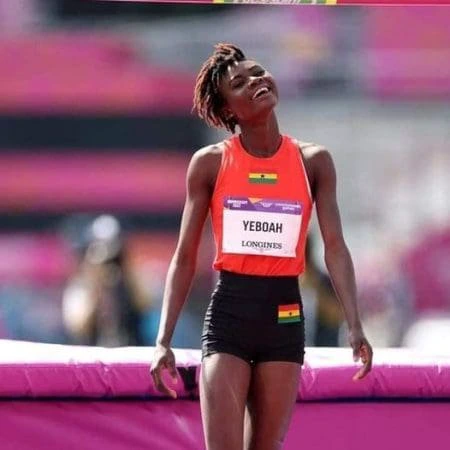
Under the bright lights of Tokyo’s Olympic Stadium, 22-year-old Rose Amoanimaa Yeboah soared higher than any Ghanaian athlete has in two decades. Though she left the 2025 World Athletics Championships without a medal, her name is now etched in the country’s sporting history as the first Ghanaian to reach the final of an individual event at the championships in twenty years.
Yeboah’s road to the final was nothing short of remarkable. In Thursday’s qualification round she cleared 1.92 metres—a personal milestone that placed her ninth overall and sealed her spot among the world’s elite high-jumpers. That single leap electrified Ghanaian fans back home, who celebrated her breakthrough as a long-awaited return to global relevance in field events.
On Sunday evening, she stood shoulder to shoulder with the best in the world, including Australia’s Nicola Olyslagers and Eleanor Patterson, displaying the composure and technical skill that have defined her season. Though the medals went elsewhere, Yeboah’s performance confirmed her status as Ghana’s brightest field-event prospect and a symbol of what dedicated training and belief can achieve.
Her journey to Tokyo was built on years of quiet work—consistent competitions, rigorous coaching, and an unshakable mindset. Coaches and administrators across Ghana now see her success as a blueprint: proof that with sustained investment and talent development, Ghanaian athletes can compete in events long dominated by other nations.
For young Ghanaian athletes, Yeboah’s achievement is more than a personal triumph; it is an invitation to dream bigger. Her leap in Tokyo signals the start of a new chapter for Ghanaian athletics, one where field events can command as much pride as the country’s celebrated sprinting tradition.
by Emmanuel Atanga | Sep 21, 2025 | AFCON, Africa, Athletics, Nigeria, Other Sports, Soccer
In Nigeria, football isn’t just a pastime—it is a national obsession, a faith that binds millions. From bustling Lagos streets to remote villages, the round leather game commands attention, passion, and endless debate. The nation’s heartbeat quickens whenever the Super Eagles take flight, even when their wings falter, as they have in the current 2026 World Cup qualifiers. Fans still cling to hope, calculating improbable routes to qualification, their eyes fixed on a single sport.
Yet, while Nigerians anxiously follow every misstep of their beloved football team, a quieter triumph is unfolding elsewhere. Thousands of miles away in Tokyo, Team Nigeria is competing at the 2025 World Athletics Championships—and delivering moments of pride that few at home are even noticing. Tobi Amusan, the world-record hurdler, battled through adversity to claim a silver medal in the 100 m hurdles. Ezekiel Nathaniel reached the 400 m hurdles final, nearly four decades after Henry Amike last did so. Kanyinsola Ajayi sprinted into the 100 m final, a feat not seen since Olusoji Fasuba in 2007.
These achievements should be celebrated as national treasures. Athletics, after all, has historically brought Nigeria its greatest Olympic glory—from Chioma Ajunwa’s historic long-jump gold in Atlanta 1996 to the exploits of Mary Onyali, Falilat Ogunkoya, Blessing Okagbare, Ese Brume, and countless others. Yet football’s shadow looms so large that these feats barely stir the public imagination.
The imbalance is troubling. Even as athletics continues to bring medals and international recognition, funding remains scarce, and talent development inconsistent. Promising athletes like Favour Ofili have switched national allegiance, frustrated by federation politics. Without urgent investment in grassroots programs, Nigeria risks another generational gap once today’s stars—Amusan, Brume, Chukwuebuka Enekwechi—retire.
Diversifying Nigeria’s sporting passion is not just about fairness; it is about opportunity. Beyond football lie riches of fame and fortune, as Amusan’s multi-million-naira prize money proves. With structured talent discovery, infrastructure, and public support, athletics, basketball, wrestling, table tennis, volleyball, and other disciplines can flourish.
Football will always hold a special place in Nigerian hearts, but a nation of over 200 million cannot afford to put all its hopes—and its youth—into a single game. It is time to celebrate every sprint, every leap, every throw, and every young athlete who dares to dream beyond the football pitch.