by Emmanuel Atanga | Mar 6, 2026 | AFCON, Africa, Nigeria, Soccer
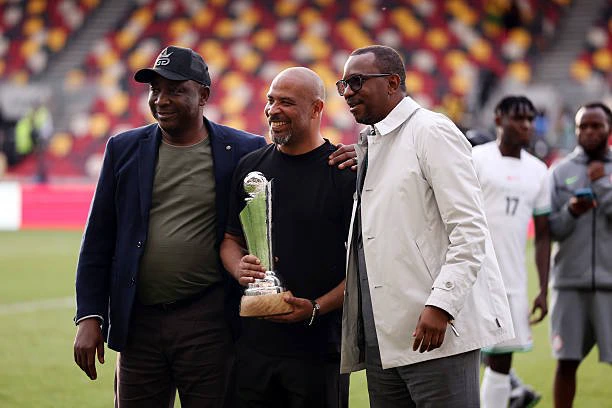
Former Nigeria national football team defender Sam Sodje has voiced strong criticism of the Nigeria Football Federation over the quality of friendly matches arranged for the national team following their recent Africa Cup of Nations campaign.
Speaking in an interview with Brila.net, Sodje expressed disappointment with the federation’s decision to schedule friendly games against the Jordan national football team and the Iran national football team during the current international window.
According to the former defender, the fixtures do not reflect Nigeria’s status or ambitions as one of Africa’s leading football nations.
“I feel sorry for Nigerian fans, and I also feel sorry for myself because it shows where we are,” Sodje said.
He questioned the purpose behind organizing such matches, suggesting that the federation should aim to schedule friendlies against stronger opponents that better prepare the team for major competitions.
“What is the reason for playing Jordan? There must be a reason. Do we have an opponent or competition that a team like Jordan is playing? What is the reason?” he asked.
While Sodje acknowledged that he is not part of the federation’s decision-making process, he insisted that honest reflection is necessary for Nigerian football to progress.
“I can’t say much because I’m not the Nigerian Football Federation. It’s not about criticizing, but we have to be honest with ourselves. Do they really know what they are doing? It’s a shame and I hope one day we will get it right,” he added.
Sodje, who made five appearances for Nigeria during his international career, has frequently spoken out on issues surrounding the management and direction of football in the country.
by Emmanuel Atanga | Mar 6, 2026 | AFCON, Africa, Europe, International, Nigeria, Soccer, World Cup
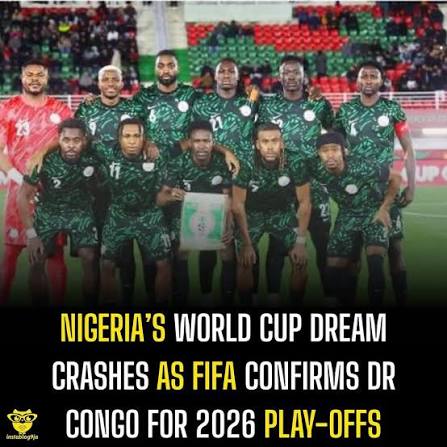
The FIFA has officially ended the Nigeria national football team hopes of qualifying for the 2026 FIFA World Cup after confirming the final lineup for this month’s inter-confederation play-off tournament.
According to an accreditation notice circulated to the media on Wednesday, March 4, FIFA outlined the format of the competition and listed the six participating nations. The announcement confirmed the DR Congo national football team as Africa’s representative for the play-off stage.
DR Congo’s inclusion effectively rules out Nigeria’s chances of advancing to the tournament through the play-off route. The Nigeria Football Federation had previously filed a formal protest following their elimination in the Confederation of African Football play-offs in November 2025.
Nigeria’s complaint alleged that DR Congo fielded ineligible players during the decisive tie between the two sides. The match ended in a 1–1 draw before DR Congo secured victory through a penalty shootout.
Despite the protest, FIFA’s confirmation of the participating teams in the inter-confederation play-off means the Super Eagles will not have another opportunity to contest for a place at the 2026 tournament.
The development closes a chapter on Nigeria’s efforts to challenge the outcome of the CAF play-offs and solidifies DR Congo’s path toward the final stage of qualification.
by Emmanuel Atanga | Mar 6, 2026 | Africa, Athletics, Basketball, Boxing, Ghana, Soccer
Professional sports in Ghana have long inspired deep passion among fans, but by 2026 the structure surrounding the games is becoming more organized and professional. While football continues to dominate the sporting scene, basketball is steadily gaining recognition as improved planning, media coverage, and development pathways reshape the country’s sporting ecosystem.
Football Remains the Heart of the Game
At the center of Ghana’s sports culture is the Ghana Premier League, which continues to drive domestic football excitement. The 2025/26 season schedule has been designed with greater consistency, allowing clubs, supporters, and broadcasters to plan around a stable calendar.
This improved organization helps ensure that matches take place as scheduled, giving fans reliable routines and keeping storylines alive throughout the season.
Established clubs with rich histories remain competitive, while emerging teams continue to challenge for prominence, creating a dynamic and unpredictable league environment.
Across neighborhoods, league matches often become social events. Fans gather around televisions or mobile streams, debating refereeing decisions, celebrating goals, and passionately supporting their teams.
Domestic Cups and Continental Dreams
Domestic cup competitions bring another layer of drama to Ghanaian football. Knockout formats increase the stakes—one defeat can end a team’s campaign instantly.
Beyond local glory, these competitions also open doors to continental opportunities. Success in domestic tournaments can influence qualification routes to African competitions, turning local matches into stepping stones toward international exposure.
The National Team Effect
The Ghana national football team continues to occupy a unique place in Ghanaian sports culture. National team matches spark nationwide debates about squad selection, tactics, and player performance.
Whenever qualifiers or major tournaments approach, the Black Stars dominate headlines and social media discussions. The team also influences the domestic league: when local players earn national call-ups, it highlights the league’s talent development. Meanwhile, players based abroad reconnect with home supporters when they return to represent the country.
Basketball’s Growing Presence
While football remains dominant, basketball is quietly expanding in Ghana.
The Ghana Basketball Federation has strengthened its organizational framework, creating better systems for coaching, officiating, youth development, and competition.
Basketball’s appeal is also linked to urban culture. The sport fits well within city environments where smaller courts and faster games attract young players. Highlights from local tournaments often spread quickly across social media, helping to promote the sport organically.
A Regional Competitive Ladder
Across Africa, structured basketball competitions and qualification routes are gradually connecting clubs to higher levels of competition. Even when Ghanaian teams are not among the final contenders, participation in regional events exposes them to higher standards and valuable experience.
These competitions show the potential pathway for clubs to grow over time, gradually building the capacity to compete on larger stages.
Modern Fan Habits and the Digital Shift
The way supporters follow sports is also changing. Many fans now consume matches through quick highlights, live updates, and social media discussions. A simple score check can quickly evolve into deeper conversations about tactics, refereeing decisions, and league standings.
Digital engagement is reshaping how Ghanaian supporters interact with sports, allowing fans to stay connected even when they cannot watch matches live.
Building a Sustainable Future
The future of professional sports in Ghana will likely depend less on short bursts of excitement and more on steady, consistent progress. Reliable scheduling, improved facilities, youth development programs, and stronger media coverage will be crucial to sustaining long-term growth.
As football continues to lead the sporting landscape and basketball gains momentum, Ghana’s sports ecosystem is gradually evolving into a more structured and professional environment.
The Bigger Picture
Ghana’s sports story is becoming more organized while maintaining the passion that has always defined it. Football remains the driving force, basketball is opening new opportunities, and fans are engaging with both sports in faster and more flexible ways.
Ultimately, the systems and clubs that prioritize consistency and long-term planning will be best positioned to turn raw talent into lasting success.
by Emmanuel Atanga | Mar 6, 2026 | Africa, Europe, International, Soccer, World Cup
The Royal Moroccan Football Federation is reportedly close to appointing Andrés Iniesta as the new sporting director for the Morocco national football team, in what is seen as a major step in restructuring the country’s football project.
According to reports, the former FC Barcelona and Spain national football team midfield maestro has reached an agreement in principle to join Morocco’s technical leadership structure. The federation hopes to tap into Iniesta’s vast experience at the highest level of world football to strengthen the team’s sporting strategy and long-term development plans.
However, some media outlets suggest that the deal has not yet been fully finalized or officially announced, even though negotiations are believed to be at an advanced stage. Iniesta is expected to take on a strategic role overseeing the national team’s football philosophy, talent recruitment, and development pathway.
The reported move is part of Morocco’s broader ambition to elevate its football structure following the country’s remarkable rise in global football in recent years.
It also aligns with the nation’s long-term preparations for major international tournaments, particularly the 2030 FIFA World Cup, which Morocco will co-host alongside Spain and Portugal.
If confirmed, the appointment would represent another bold step by Moroccan football authorities to strengthen their sporting structure and maintain the momentum that has elevated the Atlas Lions on the global stage.
by Emmanuel Atanga | Mar 6, 2026 | AFCON, Africa, Ghana, Nigeria, Soccer
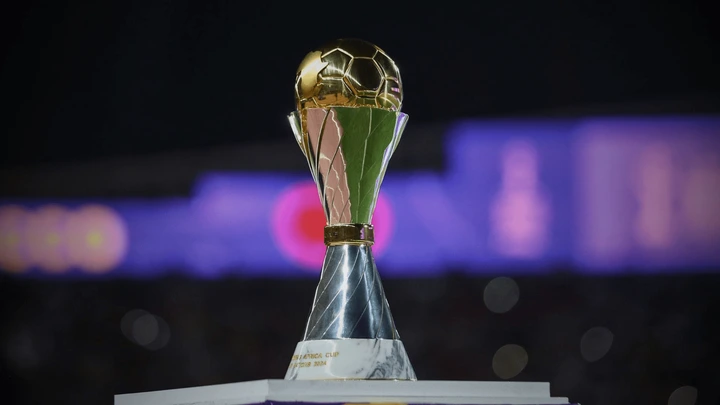
The Confederation of African Football has officially rescheduled the 2026 Women’s Africa Cup of Nations from March to July–August 2026, citing unforeseen circumstances.
CAF confirmed the decision on March 5, 2026, explaining that the new dates were agreed upon following consultations with key partners, including FIFA, as well as other stakeholders to ensure the smooth organisation of the competition.
The tournament—officially branded as the TotalEnergies CAF Women’s Africa Cup of Nations 2026—will still be hosted by Morocco. The North African nation was awarded the hosting rights in October 2024, with the competition originally scheduled to take place from March 17 to April 3, 2026.
According to CAF, the change was necessary due to “unforeseen circumstances,” although the governing body did not provide detailed reasons behind the adjustment.
The revised July–August timeline aligns the tournament with a period typically reserved for major international competitions, which could allow better coordination with the global football calendar.
CAF also indicated that preparations for the tournament remain on track, expressing confidence that Morocco will successfully stage Africa’s flagship women’s football competition.
The rescheduling follows months of discussion within African football circles regarding scheduling pressures affecting women’s competitions. Concerns had been raised about fixture congestion and the need for better alignment with international tournaments.
The Women’s Africa Cup of Nations remains the continent’s premier women’s national team tournament and continues to play a vital role in promoting and developing women’s football across Africa.
The previous edition of the competition, also hosted in Morocco in 2022, attracted record attendance and significantly boosted global attention for African women’s football.
CAF officials believe the revised schedule will provide organisers and participating teams with additional preparation time while ensuring the tournament meets expectations for players, fans, and commercial partners.