by Emmanuel Atanga | Sep 12, 2025 | AFCON, Africa, Europe, Ghana, International, Soccer, World Cup
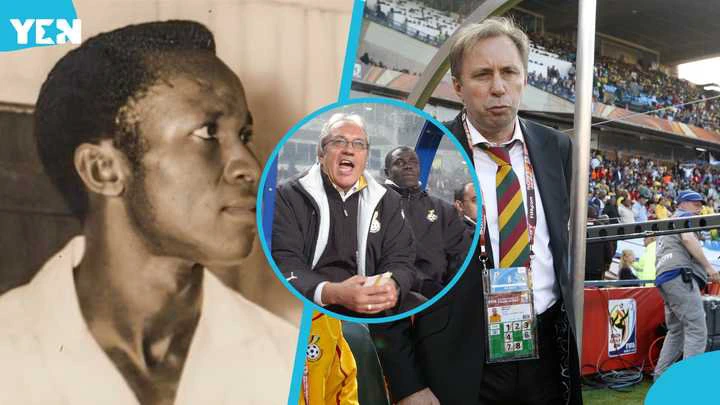
The Black Stars of Ghana have always been more than just a football team—they are a symbol of pride, resilience, and African excellence. Behind the famous goals of Asamoah Gyan, Abedi Pele, and other legends stood tactical masterminds who crafted the victories, instilled discipline, and inspired a nation.
Over the decades, a blend of local icons and foreign tacticians shaped Ghana’s footballing identity, from AFCON glories in the 1960s to historic World Cup runs in the modern era. Among them, six coaches stand tall as the greatest to have ever led the Black Stars.
Here’s a countdown of Ghana’s finest coaching minds, ranked from six to one.
6. James Kwesi Appiah
History will forever remember Kwesi Appiah as the first Black Ghanaian coach to lead the Black Stars to a FIFA World Cup, guiding them in Brazil 2014. Appointed in 2012, he also took Ghana to the semi-finals of the 2013 AFCON.
His calm and calculated style brought stability, and his breakthrough inspired a new generation of local coaches to dream of managing the national team at the very highest level.
5. Avram Grant
Avram Grant came close to ending Ghana’s AFCON drought, taking the Black Stars to the final in 2015, only to lose to Ivory Coast on penalties. He followed that up with another semi-final run in 2017.
Though he never lifted a trophy, the Israeli restored belief that Ghana could still mix it with Africa’s elite after a difficult period.
4. Fred Osam-Duodu
The late Fred Osam-Duodu was more than just a tactician; he was a teacher of the game. He guided Ghana to their 1978 AFCON triumph, cementing the Black Stars’ dominance on the continent.
Osam-Duodu also had a hand in youth development, leading Ghana’s U-20s to silver at the 1993 FIFA World Youth Championship. His influence stretched far beyond one tournament, leaving a legacy as one of Ghana’s most important football educators.
3. Ratomir Dujković
In 2006, Serbian coach Ratomir Dujković made history by guiding Ghana to their first-ever FIFA World Cup. The Black Stars reached the round of 16 in Germany, defeating the Czech Republic and the USA before bowing out to Brazil.
His ability to balance experience with young stars like Michael Essien and Asamoah Gyan set Ghana on a new global trajectory, marking the beginning of a golden era for the national team.
2. Milovan Rajevac
Milovan Rajevac is forever etched in Ghanaian hearts for masterminding the country’s greatest-ever World Cup run in 2010, where the Black Stars came within a penalty kick of reaching the semi-finals.
Under him, Ghana also finished runners-up at the 2010 AFCON. Known for defensive discipline and tactical organisation, Rajevac transformed the team into a resilient force feared worldwide.
He also guided the Black Galaxies to the final of the maiden African Nations Championship (CHAN) in 2009, showing his impact across different levels of Ghanaian football.
1. Charles Kumi Gyamfi
At the summit sits the legendary Charles Kumi “C.K.” Gyamfi, Ghana’s very own “Sir Alex Ferguson.” He led the Black Stars to three AFCON titles (1963, 1965, and 1982), a record that stood unrivalled for decades.
More than just a winner, Gyamfi instilled a fearless identity in Ghanaian football, turning the Black Stars into Africa’s most dominant side of their era. His success and philosophy remain the ultimate benchmark for every Ghanaian coach.

by Emmanuel Atanga | Sep 12, 2025 | Africa, Europe, Ghana, International, Nigeria, Soccer, World Cup
The race to the 2026 FIFA World Cup has thrown up some shocking twists, with several of football’s biggest names staring at the possibility of missing out on the tournament. Once considered untouchable, these traditional powerhouses are discovering that global football has become far more competitive, leaving no room for complacency.
Italy, four-time world champions, are in danger of missing a third consecutive World Cup after a humiliating 3-0 defeat to Norway. Germany, another European heavyweight, continue to stumble with inconsistent form, highlighted by a shock loss to Slovakia. Belgium’s “Golden Generation” may also be running out of steam, with a decisive clash against Wales set to determine their future.
On the African continent, the story is no less dramatic. Ivory Coast must win all remaining fixtures to avoid slipping into a dreaded second-place playoff, while Cameroon are trailing Cape Verde by four points and have little margin for error. For Nigeria, the situation is even more dire — the Super Eagles are six points behind South Africa with just one game left, making qualification almost impossible without a miracle.
As the qualification campaigns reach their climax, one thing is clear: the days of automatic tickets for traditional giants are over. The World Cup stage is now a battleground where reputation alone counts for nothing.
by Emmanuel Atanga | Sep 12, 2025 | Africa, Athletics, Europe, International
Ghana is set for a busy September on the global sporting stage, with athletes competing in both the World Athletics Championships in Japan and the World Armwrestling Championships in Bulgaria.
Ghana Athletics has confirmed an eight-member squad for the 2025 World Athletics Championships, scheduled for September 13–21 in Tokyo. Leading the team is national sprint sensation Abdul-Rasheed Saminu, who recently shattered Ghana’s 100m record twice with blistering runs of 9.86s and 9.84s, eclipsing Benjamin Azamati’s previous 9.90s mark.
Saminu will line up against world-class sprinters including Noah Lyles and Kenny Bednarek of the USA, as well as Jamaica’s Kishane Thompson and Oblique Seville. He will be joined in the men’s 100m by Azamati, while Ibrahim Fuseini takes on the 200m and Alex Amankwa contests the 800m.
The men’s 4x100m relay team features Saminu, Azamati, Fuseini, Barnabas Aggerh, Joseph Paul Amoah, and Mustapha Alufa Bokpin, giving Ghana strong representation in the sprints. On the women’s side, Rose Amoaniwaa Yeboah will be Ghana’s sole female competitor, featuring in the high jump.
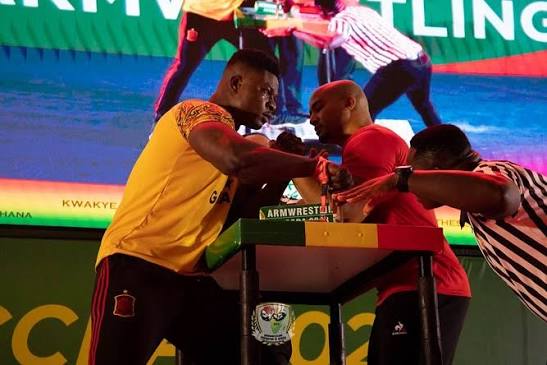
Meanwhile, on a different front, the Ghana Armwrestling Federation (GAF) has announced a three-member team for the World Armwrestling Championships in Albena, Bulgaria. The selected pullers are Daniel Acquah (60kg), Mabel Yeboah (55kg), and Blessed Abeka Nunoo (60kg). They will compete against more than 1,300 athletes from 92 countries in an event running until September 23, 2025.
With Ghana’s sprinters chasing medals in Tokyo and its armwrestlers testing their strength in Bulgaria, the nation will be flying its flag high across two major international arenas this month.
by Emmanuel Atanga | Sep 12, 2025 | Africa, Ghana, International, Nigeria, Soccer, World Cup
The road to the 2026 FIFA World Cup took dramatic turns across Africa in the latest qualifying window. Some dreams ended, others were revived, and one team officially booked its ticket to the United States, Mexico, and Canada.
From a statement win in Rabat to a rising star in Nairobi, these five defining moments reshaped the qualification landscape — for some nations, hope remains alive, but for others, it is already too late.
Morocco Lead the Way
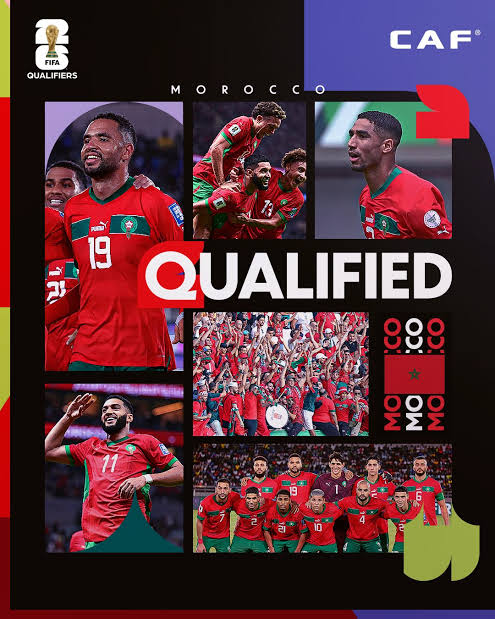
Morocco’s 5-0 thrashing of Niger in Rabat didn’t just add to their impressive streak — it sealed their place as the first African nation to qualify for 2026. A 2-0 follow-up win in Zambia underlined their dominance, taking their tally to 21 points from seven games.
Coach Walid Regragui now has the luxury of rotating his squad with two matches to spare, while the rest of Group E must scrap for second place. For the continent at large, Morocco’s flawless efficiency is a reminder that consistency is everything in qualification.
Wissa Sparks DR Congo
Yoane Wissa’s arrival gave DR Congo fresh energy, his sharp display helping secure a 4-1 win over South Sudan. His partnership with Cedric Bakambu injected attacking variety at just the right time.
Though they fell 3-2 to Senegal in their next outing, Wissa’s influence kept DR Congo within two points of the group leaders. It proved how one in-form signing can tilt the balance of a qualifying campaign.
Injuries Shadow South Africa’s Progress
South Africa dispatched Lesotho 3-0 to tighten their grip on Group C, but defensive injuries soon cast a shadow. Against Nigeria, Bafana Bafana held firm for a 1-1 draw in Bloemfontein, keeping them three points clear of Benin and six ahead of Nigeria.
The results look positive, but injuries could yet open the door for challengers. Qualifying is as much about depth as form — a lesson South Africa may be learning the hard way.
Minteh’s Breakout in Nairobi
Gambia’s Yankuba Minteh stole the show with a dazzling performance in a 3-1 away win over Kenya. His pace and direct play gave the Scorpions a glimpse of what could have been had such results arrived earlier.
Sitting ten points behind Ivory Coast and trailing Gabon, Gambia are effectively out of contention. Yet Minteh’s rise offers a blueprint for smaller nations: one standout player, combined with structure, can unsettle the giants.
Guirassy Keeps Guinea Alive
Serhou Guirassy carried his club form into Guinea’s 3-0 win over Somalia, showing why he has become their focal point. His goals give Guinea hope, though their path is narrow: eight points behind Algeria and four shy of Uganda in the playoff spot.
Cape Verde, meanwhile, remain the group’s surprise package — six wins and a draw have them within touching distance of a first-ever World Cup qualification.
Five Lessons from the Window
Flawless runs like Morocco’s show the high cost of dropped points.
One transfer or in-form striker can transform a campaign.
Injuries can derail momentum, as South Africa discovered.
Small nations with big talents can upset the balance, like Minteh’s Gambia.
Depth and squad management remain decisive in the long march to 2026.
The window closed with triumphs, setbacks, and new storylines — and with Africa’s World Cup race tightening, the next chapter promises even more drama.
by Emmanuel Atanga | Sep 12, 2025 | Africa, Europe, International, Nigeria, Soccer, World Cup
As the countdown begins to the 2025 FIFA U20 World Cup in Chile (September 27 – October 19), football fans worldwide are bracing for another thrilling edition of the youth spectacle.
Africa’s hopes will rest on Morocco, Egypt, South Africa, and Nigeria, who aim to follow in Ghana’s historic footsteps and deliver the continent’s second world title at this level.
Beyond team glory, all eyes will also be on the battle for the Golden Ball, the award given to the tournament’s best player. Since its introduction in 1977, the U20 World Cup has produced some of football’s biggest icons, and the upcoming tournament promises another star-making stage.
The question remains: who will emerge as the next global sensation in Chile ?