by Emmanuel Atanga | Sep 12, 2025 | Africa, Athletics, International, Nigeria, Other Sports, World Cup
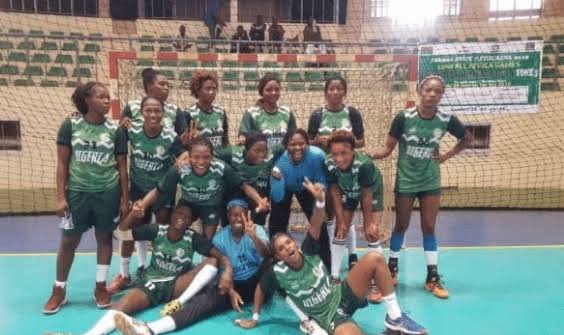
Nigeria’s U-18 women’s handball team has touched down in Oran, Algeria, for the 2025 African Women’s Youth Handball Championship, which kicks off from September 14 to 21.
The young Queens, led by head coach John Uzor, had been camping and fine-tuning their strategies at the Rowe Park Sports Centre in Yaba, Lagos, before making the trip. Their mission is clear—secure a place on the podium and book a ticket to the 2026 IHF Women’s Youth World Championship.
Coach Uzor, brimming with confidence, highlighted the team’s determination:
> “The previous set came third two years ago, so expectations are high. We either surpass that or maintain the standard. With more countries competing this year, we’ve been working hard to prepare the girls to do even better.”
He further emphasized their ultimate goal:
> “Five teams will qualify for the World Cup, and I’m convinced we’ll be among them. Even if we don’t win a medal, qualifying for the World Cup is non-negotiable.”
Group Battles Ahead
Nigeria has been drawn into Group A alongside Angola, Tunisia, Kenya, Benin Republic, and Madagascar. Meanwhile, hosts Algeria will compete in Group B with defending champions Egypt, Guinea, Burkina Faso, and Zambia.
The competition will be staged across two prestigious venues—the 7,000-capacity Miloud Hadefi Complex Arena and the 5,000-seater Hamou Boutlelis Sports Palace.
Chasing History
Nigeria heads into the tournament on the back of a strong outing at the 2023 edition in Monastir, Tunisia, where they clinched bronze by defeating three-time champions Angola 28–24. With that pedigree, the team is determined to not just repeat history but carve out a bigger success story in Oran.
The 2025 Championship also doubles as qualifiers for both the 2026 World Cup and the IHF Women’s Intercontinental Phase, raising the stakes even higher.
by Emmanuel Atanga | Sep 12, 2025 | Africa, Europe, Ghana, International, Soccer
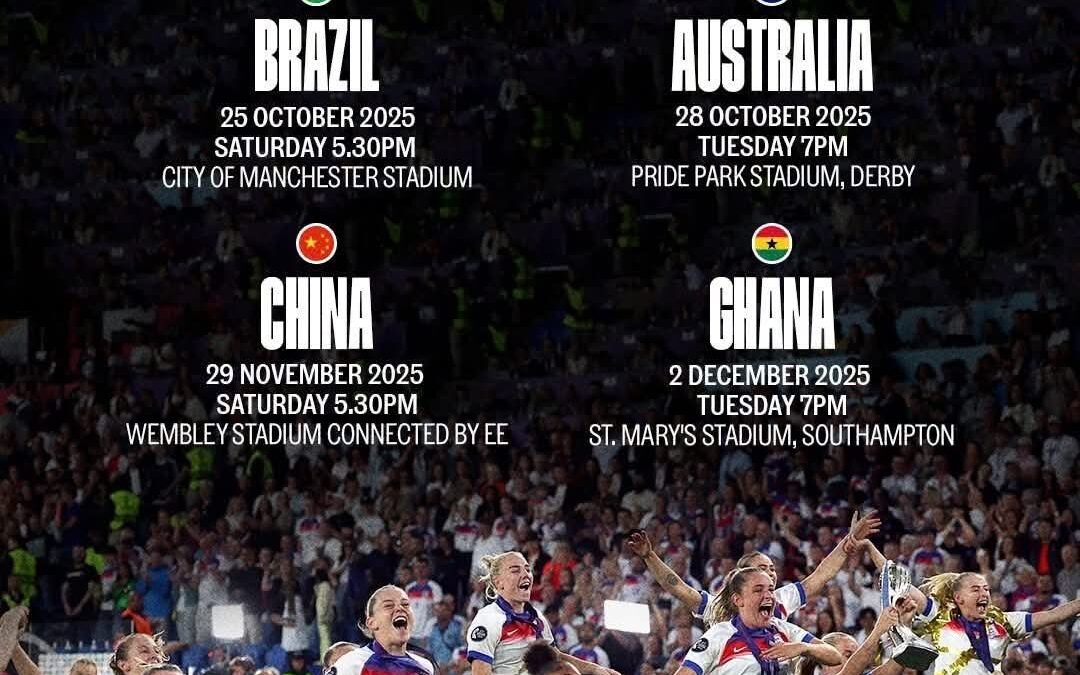
When the Black Queens step onto the pitch at St Mary’s Stadium in Southampton on Tuesday, December 2, 2025, history will be written. For the first time ever, Ghana’s senior women’s national football team will face England’s Lionesses — reigning European champions and one of the most feared forces in world football.
The fixture, part of England’s much-celebrated Homecoming Series, offers more than just a friendly. For the Black Queens, it is a moment of pride, ambition, and renewal.
As trailblazers of African women’s football, the Queens carry a legacy that cannot be overlooked. In 1999, they became the first African women’s side to qualify for the FIFA Women’s World Cup, blazing a path for the continent. Over the years, Ghana has produced icons such as Alberta Sackey, Adjoa Bayor, Portia Boakye, and Evelyn Badu — players who have lifted the Ghanaian flag high and inspired countless young talents.
Yet, the road has not been without its challenges. While Nigeria, South Africa, and Equatorial Guinea have more recently dominated African women’s football headlines, Ghana is quietly rebuilding. With the 2027 FIFA Women’s World Cup qualifiers on the horizon, this clash is perfectly timed — a stern test of tactical strength, mental resilience, and collective belief.
For the Black Queens, Southampton represents more than just 90 minutes of football. It is a global stage to remind the world of their pedigree, to showcase Ghanaian talent against one of the world’s elite, and to signal their intent to rise again.
This historic encounter is more than a game — it is a statement.

by Emmanuel Atanga | Sep 12, 2025 | Africa, Ghana, International, Soccer, World Cup
The Black Stars of Ghana took another giant step toward the 2026 FIFA World Cup after edging past Mali in a tense qualifier that showcased both resilience and determination.
Defender Alexander Djiku emerged the unlikely hero, rifling home the decisive goal in the 49th minute to hand Otto Addo’s men a hard-fought 1-0 victory. The result ensured Ghana tightened their grip at the top of Group I, now boasting 19 points from eight matches — six wins, a draw, and just one defeat.
The win not only boosted confidence but also reminded fans of the Black Stars’ ability to grind out crucial results when it matters most. With standout contributions from Jordan Ayew, Mohammed Kudus, Antoine Semenyo, Thomas Partey, and Djiku, Ghana’s blend of grit and attacking flair continues to inspire belief.
But the journey is far from over. All eyes now turn to October, when the Black Stars face two decisive fixtures: an away clash against the Central African Republic in Bangui on the 6th, followed by a return to Accra to host Comoros four days later. Victories in both would put Ghana firmly in the driving seat for qualification.
For Otto Addo and his players, consistency is the key as they push to restore Ghana to football’s grandest stage. And for the passionate fans, every match from here on is another step closer to seeing their beloved Black Stars shine in North America in 2026.
by Emmanuel Atanga | Sep 12, 2025 | AFCON, Africa, Ghana, International, Soccer
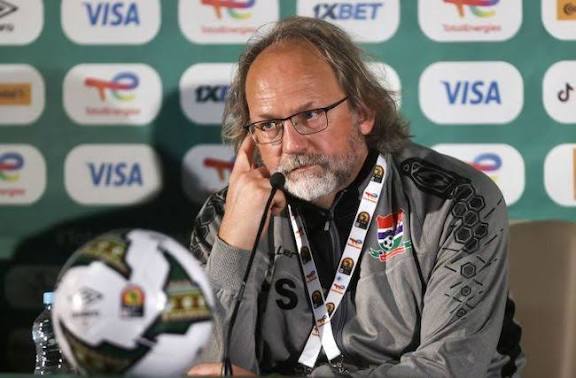
In the wake of Ghana’s shock absence from the 2025 Africa Cup of Nations, doubts have begun to swirl over the Black Stars’ standing in African football. Yet, amid the noise, Mali’s Belgian coach, Tom Saintfiet, has stepped forward with a firm reminder: Ghana’s footballing flame has not dimmed—it has only flickered.
Speaking with conviction, Saintfiet—who once came close to managing Ghana himself—rejected claims that missing out on a major tournament signals the beginning of a decline.
“The availability of players in Ghana is immense,” he insisted, pointing to the deep reservoir of talent that continues to flow from the West African nation.
To reinforce his point, the veteran coach drew from history. “Italy did not qualify for the World Cup. Nigeria became champions in 2013, and in the very next AFCON, they were not qualified,” he said. His words framed Ghana’s stumble as part of football’s unpredictable rhythm rather than a collapse.
Saintfiet also reminded the world of Ghana’s near-historic run at the 2010 FIFA World Cup, where only Luis Suárez’s infamous handball stopped the Black Stars from becoming Africa’s first semi-finalists. That moment, he argued, still symbolizes Ghana’s pedigree on the global stage.
For him, the Black Stars’ foundations—talent, infrastructure, and a rich football history—are far too strong to be erased by one failure.
“Ghana is still among Africa’s elite,” Saintfiet concluded. “This is only a temporary setback.”
by Emmanuel Atanga | Sep 12, 2025 | Africa, International, Soccer, World Cup
Equatorial Guinea’s hopes of overturning two costly 3-0 forfeits in the 2026 World Cup qualifiers have officially been dashed after the Court of Arbitration for Sport (CAS) rejected their appeal.
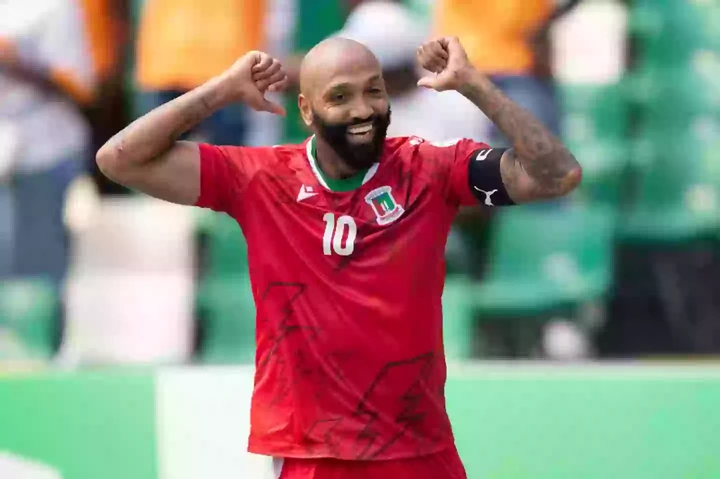
The controversy began when FIFA ruled that Equatorial Guinea had fielded an ineligible player in their November 2023 victories over Namibia and Liberia. That player was none other than Emilio Nsue, the country’s all-time top scorer, who netted the decisive goals in both 1-0 wins.
Despite his long international career, Nsue’s eligibility was once again questioned due to his past appearances for Spain’s youth sides. FIFA had previously declared him ineligible in 2013, citing that he had not received proper clearance to switch allegiance. Although the Equatoguinean federation (Feguifut) filed a fresh request earlier this year and secured clearance for Nsue, the governing body’s earlier punishments remained in place.
In April, FIFA handed Namibia and Liberia 3-0 wins by default, slashing Equatorial Guinea’s qualification hopes. Feguifut appealed to CAS, seeking to restore the lost six points, but their case was dismissed on procedural grounds. CAS ruled that Namibia’s and Liberia’s federations should have been included as parties in the appeal, and without them, the challenge could not stand.
The verdict, delivered on July 28 and published this week, leaves the two forfeits intact. FIFA defended its decision, stressing that the African nation was fortunate not to have been expelled entirely from the competition, given the severity of the breach.
The ruling means Namibia retain their place in the next stage of qualifying, while Equatorial Guinea must regroup with their World Cup dream hanging by a thread.