by Emmanuel Atanga | Feb 21, 2026 | Africa, Europe, Ghana, International, Soccer, USA, World Cup
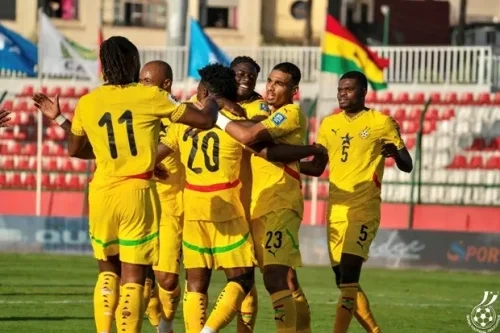
The Ghana Football Association has selected Bryant University in Smithfield, Rhode Island, as the official base camp for the Black Stars ahead of the 2026 FIFA World Cup.
According to reports, the university will host Ghana’s preparations for the global showpiece, which will be jointly staged by the United States, Canada, and Mexico. The decision provides the team with a stable and modern training environment as they gear up for their fifth appearance at the tournament.
The Black Stars have been drawn in Group L, where they will face strong competition from:
England national football team
Croatia national football team
Panama national football team
Group L Match Schedule
June 17 – Ghana vs Panama (Toronto)
June 23 – Ghana vs England (Foxborough)
June 27 – Ghana vs Croatia (Philadelphia)
Ghana will be aiming to surpass their historic 2010 performance, when they reached the quarterfinals — the country’s best finish at the World Cup.
With a competitive group and high expectations from fans back home, setting up camp early in Rhode Island signals Ghana’s intent to prepare thoroughly and make a meaningful impact on football’s biggest stage.
by Emmanuel Atanga | Feb 21, 2026 | Africa, Europe, International, Nigeria, Soccer, World Cup
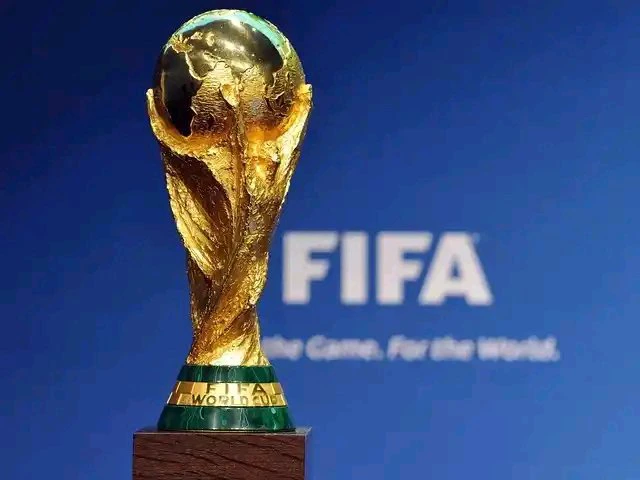
The FIFA World Cup is the pinnacle of international football, where nations compete for global glory. Yet, throughout history, some absences from the tournament have not been due to results on the pitch, but rather disciplinary action from FIFA.
Since 1950, 17 countries have faced suspension or bans from World Cup participation, largely due to political interference, governance failures, or breaches of competition regulations.
Recent sanctions involving Pakistan and Congo — alongside Russia’s continued exclusion — highlight FIFA’s firm stance on administrative independence and compliance.
Here is a breakdown of the affected nations and the reasons behind their suspensions:
Germany (1950) – Banned following World War II due to its wartime role.
Japan (1950) – Also barred after World War II.
South Africa (1970–1990) – Suspended over apartheid policies before being reinstated in 1991.
Mexico (1990) – Sanctioned for fielding overage players in a youth tournament, resulting in a two-year ban.
Chile (1994) – Punished after goalkeeper Roberto Rojas faked an injury during a 1989 qualifier against Brazil.
Myanmar (2006) – Barred for withdrawing from a World Cup qualifier against Iran.
Iraq (2008) – Temporarily suspended after government dissolution of national sporting bodies.
Nigeria (2014) – Suspended due to government interference in its football federation.
Kuwait (2015) – Banned over political interference in football administration.
Indonesia (2015) – Suspended for governance-related interference.
Guatemala (2016) – Barred because of government involvement in football affairs.
Pakistan (2017, 2021, 2025) – Faced repeated suspensions due to internal federation disputes.
Chad (2021) – Banned for government interference in football operations.
Russia (2022, 2026) – Suspended following the invasion of Ukraine.
Zimbabwe (2022) – Sanctioned after authorities dissolved the national football association.
Kenya (2022) – Banned over financial mismanagement before the suspension was lifted.
Congo (2025) – Recently barred due to external interference in football governance.
While FIFA bans often spark controversy and debate, they underscore the governing body’s commitment to safeguarding independence, transparency, and proper administration within the sport. These cases illustrate how political instability, governance lapses, and rule violations can profoundly impact a nation’s participation on football’s biggest stage.
by Emmanuel Atanga | Feb 21, 2026 | Africa, Europe, International, Nigeria, Soccer
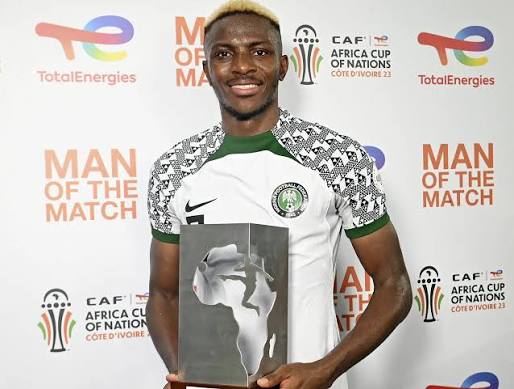
Super Eagles striker Victor Osimhen has shared more painful memories from his upbringing in Olusosun, a struggling community in Lagos, revealing the harsh realities his family endured long before fame and fortune arrived.
Speaking in an emotional piece with The Players’ Tribune, the 27-year-old recounted how poverty shaped his early years. At just 12 years old, he watched helplessly as their landlord disconnected electricity to their single-room apartment over unpaid bills.
With his mother gone and his father having lost his job as a driver, survival became a daily battle. His father later found work washing dishes in a police department kitchen, earning barely enough to support the family.
Osimhen described nights spent in complete darkness, with all seven family members crowded into one room without power or entertainment. Overwhelmed by frustration, he would sometimes step outside and sit by a gutter, crying in silence.
The hardships did not end there. In a desperate attempt to force the family out, the landlord allegedly removed part of their roof after promising repairs — leaving their home exposed and unsafe.
To help make ends meet, Osimhen said he gave everything he earned to his siblings for food and rent. On many occasions, he slept in a church because their house offered little shelter.
Despite the bitterness of those memories, the Napoli forward (now a global star and one of Nigeria’s most celebrated footballers) speaks of his past not with resentment, but with resilience — a reminder of how far determination can carry someone from the margins of society to the biggest stages in world football.

by Emmanuel Atanga | Feb 21, 2026 | AFCON, Africa, Europe, International, Nigeria, Soccer, USA, World Cup
Nigeria appears to be bracing for a future without the 2026 World Cup, as recent developments from the Nigeria Football Federation (NFF) signal a decisive shift in focus.
While a final verdict from FIFA is still pending regarding Nigeria’s petition against DR Congo national football team over alleged ineligible players, the federation’s latest move suggests the Super Eagles are no longer counting on a dramatic reversal.
On Friday, NFF Director of Communications Ademola Olajire confirmed that Nigeria will participate in a Four-Nation Invitational Tournament in Amman, Jordan, during next month’s FIFA international window — the same period reserved for the final World Cup playoffs.
According to the statement, the three-time African champions will open their campaign against the Iran national football team at the 17,000-capacity Amman International Stadium on March 27, 2026. On the same day, hosts Jordan national football team will face Costa Rica national football team at the King Abdullah Sports City Stadium.
The fixtures will conclude on March 31, with Nigeria taking on Jordan, while Costa Rica meet Iran.
The scheduling has drawn attention because it overlaps with the decisive World Cup playoff window. Nigeria’s commitment to friendlies — with no reference to potential playoff involvement — strongly indicates that the federation is preparing for life beyond the 2026 tournament.
The Pending Petition
Nigeria’s legal battle stems from their penalty shootout defeat to DR Congo in the African playoffs last November. The NFF questioned the eligibility of certain Congolese players, citing concerns over dual citizenship laws and suggesting that FIFA may have been misled during the clearance process.
NFF General Secretary Mohammed Sanusi maintained that while FIFA recognises players based on valid passports, there were concerns about whether proper disclosures were made.
However, FIFA has yet to issue an official ruling. The NFF recently dismissed online reports claiming that a decision had already been delivered in mid-February.
Chairman of the National Sports Commission, Shehu Dikko, also confirmed that the matter remains before FIFA’s independent disciplinary and ethics bodies.
Despite confidence in their case, Dikko admitted that the federation has effectively “closed the World Cup chapter” and is concentrating on future competitions.
A New Chapter Begins
For the Super Eagles, missing back-to-back World Cups — 2022 and now seemingly 2026 — is a bitter reality. But rather than waiting on a legal miracle, Nigeria appears to be prioritising rebuilding, long-term planning, and preparations for upcoming tournaments, including the Africa Cup of Nations.
While the legal process continues in the background, the message from Abuja is clear: the focus has shifted from appeals to ambition — from courtroom hopes to footballing renewal.

by Emmanuel Atanga | Feb 21, 2026 | AFCON, Africa, Soccer
In the aftermath of the unprecedented chaos that marred the AFCON final on January 18 in Rabat, a rare moment of candour emerged from within African football’s corridors of power. Samir Sobha, president of the Mauritius FA and a member of CAF’s executive committee, publicly acknowledged what many observers had already concluded — that Morocco was treated unjustly.
“I want to plead with the Moroccan FA to forgive us for the injustice done to them.
The rules have not been respected, as they should have been in this match. They were robbed,” Sobha admitted. He further insisted that all Senegalese players should have received yellow cards for leaving the pitch, highlighting serious lapses in the application of the laws of the game.
For those familiar with the governance history of the Confederation of African Football, Sobha’s remarks may not have come as a shock. What stands out, however, is the blunt honesty with which he exposed what many critics describe as a culture of administrative inconsistency and ethical decline within CAF’s leadership structure.
While Sobha deserves credit for his courage in breaking ranks, heartfelt apologies alone cannot repair institutional damage. Symbolic statements, no matter how sincere, cannot substitute for accountability or due process. If justice is to transcend public relations gestures, then the Moroccan Football Federation may find its most viable recourse at the Court of Arbitration for Sport (CAS).
In football — as in life — fairness must not only be preached; it must be practiced.