by Emmanuel Atanga | Jul 29, 2025 | Africa, Europe, International, Nigeria, Soccer
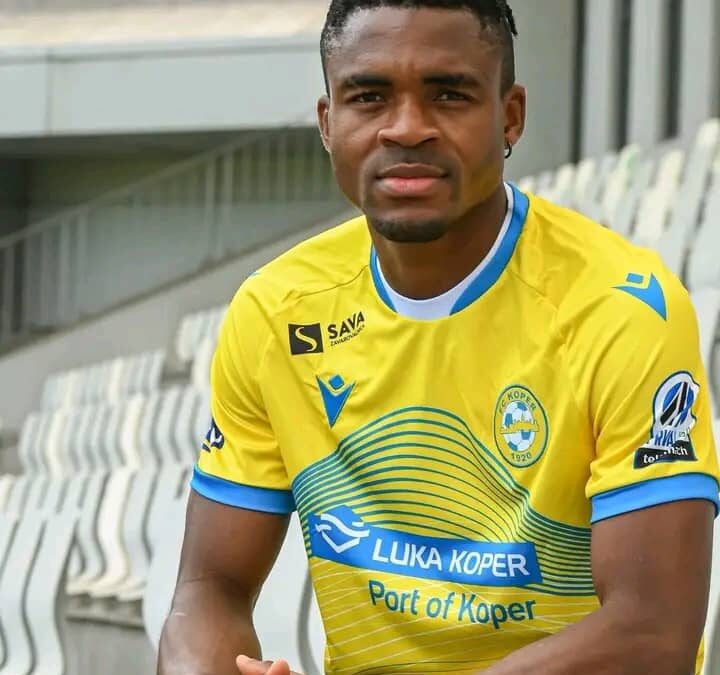
In a significant leap forward for his budding career, 19-year-old Nigerian defender Victor Ugwusinachi Ehibe has officially signed with Slovenian top-flight club FC Koper.
The young center-back, who has shown immense promise on home soil, is now set to test his talents in Europe, joining a club known for nurturing young talent and offering a springboard into bigger leagues.
FC Koper announced the signing with excitement, expressing confidence in Ehibe’s potential to strengthen their defensive ranks. For Ehibe, this move marks the beginning of a new chapter — one filled with challenges, growth, and an opportunity to put Nigerian talent on the Slovenian football map.
The deal underscores the growing trend of European clubs turning their attention to Nigeria’s rich pool of young footballers, eager to uncover the next big star.
by Emmanuel Atanga | Jul 29, 2025 | AFCON, Africa, Nigeria, Soccer
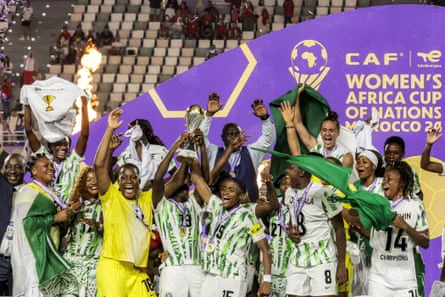
When Justine Madugu was handed the reins of the Super Falcons in September last year, many in Nigerian football circles questioned the decision. The 61-year-old had never led a national team before, let alone one as storied and decorated as Nigeria’s senior women’s side. Yet, ten months later, Madugu silenced the doubters in the most dramatic way possible – by guiding Nigeria to a record-extending 10th Women’s Africa Cup of Nations (WAFCON) title, completing what the nation dubbed “Mission X.”
The odds were stacked against the Super Falcons, especially after a shaky start to the tournament. Although they topped Group C unbeaten, critics back home were unimpressed by their narrow victories over Tunisia and Botswana and a goalless draw with Algeria. But Madugu stayed calm, insisting his side was “a work in progress,” one game at a time.
That steady resolve would face its sternest test in the final at the Olympic Stadium in Rabat. Facing hosts Morocco, managed by former Spain boss Jorge Vilda, the Falcons were stunned early – conceding twice in the opening 24 minutes to Moroccan skipper Ghizlane Chebbak and the lively Sanaa Mssoudy. Madugu, animated on the sidelines, urged his players to keep their shape and find spaces behind the Moroccan lines. But heading into halftime, it looked like Nigeria’s perfect WAFCON final record — nine wins out of nine — was about to end.
Then came the comeback.
PSG’s Onyi Echegini and AS Roma winger Rinsola Babajide came off the bench to inject pace and purpose. Slowly, the tide began to turn. Esther Okoronkwo, who had been Nigeria’s talisman throughout the tournament, pulled one back, then Babajide added a stunning equalizer. With Morocco reeling, Echegini delivered the final blow – a calm finish to seal a 3-2 comeback victory that will be remembered for generations.
“It was all or nothing,” Okoronkwo reflected after being named Player of the Final. “At halftime, we just looked each other in the eye and decided we weren’t going out like that. We found our spirit.”
Madugu credited the team’s mental toughness and belief. “If they didn’t have that resilience, we wouldn’t have turned it around,” he said. “They believed until the last whistle.”
Desire Oparanozie, the former Super Falcons captain who famously scored the winner in Nigeria’s 2016 final triumph against Cameroon, captured the essence of the moment: “The Falcons have always played with hunger. They want to win, they want to dominate, and they showed it again. Morocco were good, but Nigeria’s mentality is unmatched.”
While Nigeria celebrated a 10th continental crown, others noted that the tournament still has room for growth. South Africa’s coach, Desiree Ellis, highlighted the need for better scheduling and travel logistics. “Recovery and movement between venues was tough this time,” she said. “CAF must improve that ahead of the next edition.”
That next edition comes quickly — Morocco will host the WAFCON finals again next year, providing another chance to build on this year’s drama and spectacle.
For now, Nigeria celebrates. From doubts to dominance, Justine Madugu and his fearless Super Falcons have delivered “Mission X” in emphatic fashion.
by Emmanuel Atanga | Jul 29, 2025 | AFCON, Africa, Europe, Ghana, International, Soccer, World Cup
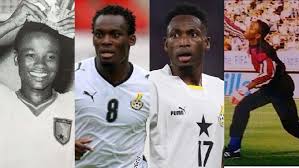
In the beautiful game, talent alone is never enough. Destiny plays a part—but so does luck. And sometimes, luck is cruel. For Ghana, a country that has produced some of Africa’s most dazzling footballers, the cost of injuries has been heartbreakingly high. In this story, we journey through the lives of four extraordinary players—Baba Yara, Michael Essien, Daniel Opare, and Abedi Ayew Pelé—whose careers were either ended, dimmed, or detoured by devastating injuries. Their stories are a haunting reminder of what could have been.
1. Baba Yara – The King of Wingers Whose Reign Was Cut Short
Before there were stadiums bearing his name, there was just a boy from Kumasi who dreamt of greatness. Baba Yara, once a horse jockey, sprinted his way into the hearts of football fans in the late 1950s with Asante Kotoko and the Ghana national team.
He was electrifying—fast, intelligent, and unstoppable on the flanks. By 1960, after a brilliant performance at the Olympic Games in Rome, he was being whispered about across Africa as a legend in the making.
But fate had other plans.
In 1963, while traveling with Kotoko for a match, a car accident changed everything. Yara was left paralyzed from the waist down. He never played again. He never walked again. He died in 1969 at just 33.
Yet, in those brief years, he lit a fire in Ghanaian football that still burns. The Baba Yara Sports Stadium stands as both tribute and tombstone—a reminder of a life and legacy interrupted.
2. Michael Essien – The Bison Who Ran Into the Wall
Few players combined power and precision like Michael Essien. Known as “The Bison,” he dominated midfields for Lyon, Chelsea, and the Black Stars with fearless tackles, lung-bursting runs, and thunderous goals.
He was a cornerstone of Ghana’s golden generation and a Chelsea legend under Mourinho.
But in 2008, disaster struck.
On international duty, Essien tore his cruciate ligament. He came back—but never the same. In 2010, another knee injury ruled him out of Ghana’s historic run to the World Cup quarterfinals in South Africa. The years between 2008 and 2012 saw multiple surgeries, missed seasons, and fading brilliance.
At his peak, Essien was Ballon d’Or material. Injuries denied him that recognition and shortened his time at the top. Yet even diminished, his heart never wavered. He remains a hero—but one whose career was robbed of its full bloom.
3. Daniel Opare – The Wonderkid Who Faded Too Soon
At the 2007 U-17 World Cup, Daniel Opare was hailed as the next big thing. His performances at right-back drew comparisons to Dani Alves. Real Madrid signed him at just 17.
But behind the scenes, Opare was fighting a losing battle with his own body.
Chronic muscle and ankle injuries disrupted his early years in Europe. Clubs like Porto, Standard Liège, and Augsburg saw flashes—but not consistency. Ghana still called him up for the 2014 World Cup, but the boy wonder had already lost his spark.
Now semi-active, Opare’s career is a tale of what might have been. Promise unfulfilled. Potential unclaimed.
4. Abedi Ayew Pelé – The Genius Who Carried Scars
Unlike the others, Abedi Pelé made it. He won the Champions League with Marseille, was named African Footballer of the Year three times, and captained Ghana with pride.
But even he wasn’t spared.
Recurring hamstring and groin injuries plagued key years of his career, especially in the early ’90s. He missed the 1992 AFCON final, where Ghana narrowly lost to Ivory Coast on penalties. Other absences meant missed chances to shine even brighter on the world stage.
Abedi’s legend is secure. Yet there remains the quiet question: Could he have been even greater? A FIFA World Player of the Year nominee? A bigger presence in Europe?
We’ll never know.
Final Whistle: A Legacy of Triumph and Tragedy
The story of Ghanaian football is etched with both glory and grief. Baba Yara’s shattered spine. Essien’s knees. Opare’s ankles. Abedi’s lingering pains. Each injury wasn’t just physical—it was the loss of a chapter never written.
These men remind us that football greatness doesn’t just depend on talent, but on the fragile thread of health. They gave what they could. Sometimes, it wasn’t enough—because fate took the rest.
Yet in the brokenness, they found immortality. Not just as players, but as symbols of resilience, brilliance, and sacrifice.
by Emmanuel Atanga | Jul 29, 2025 | AFCON, Africa, Europe, Ghana, International, Soccer, World Cup
Ghana’s women’s football received a powerful boost as the Black Queens secured a historic bronze medal at the 2024 Africa Women’s Cup of Nations (AWCON) in Morocco—their first podium finish since 2016.
In a dramatic third-place showdown, the Queens stunned defending champions South Africa with a thrilling 2-1 victory, following a tough semifinal loss to arch-rivals and eventual winners Nigeria. The win not only ended an eight-year medal drought but also reawakened national pride in a team steadily rising from the shadows.
The Women’s Sports Association of Ghana (WOSPAG) led the chorus of praise. President Joyce Mahama hailed the players’ unwavering determination and grit. “They overcame trying moments and dethroned South Africa—a testament to their spirit,” she said, lauding the strategic acumen of Head Coach Nora Häuptle (referred to locally as Coach Lars). Mahama urged for the team’s long-term nurturing: “Maintain and package this team; their young talents are ready to fight for Ghana’s future glory.”
Beyond celebration, WOSPAG called for meaningful action—appropriate rewards, better structures, and increased investment in women’s football. “This is the time to build. These women have inspired a new generation,” Mahama stated.
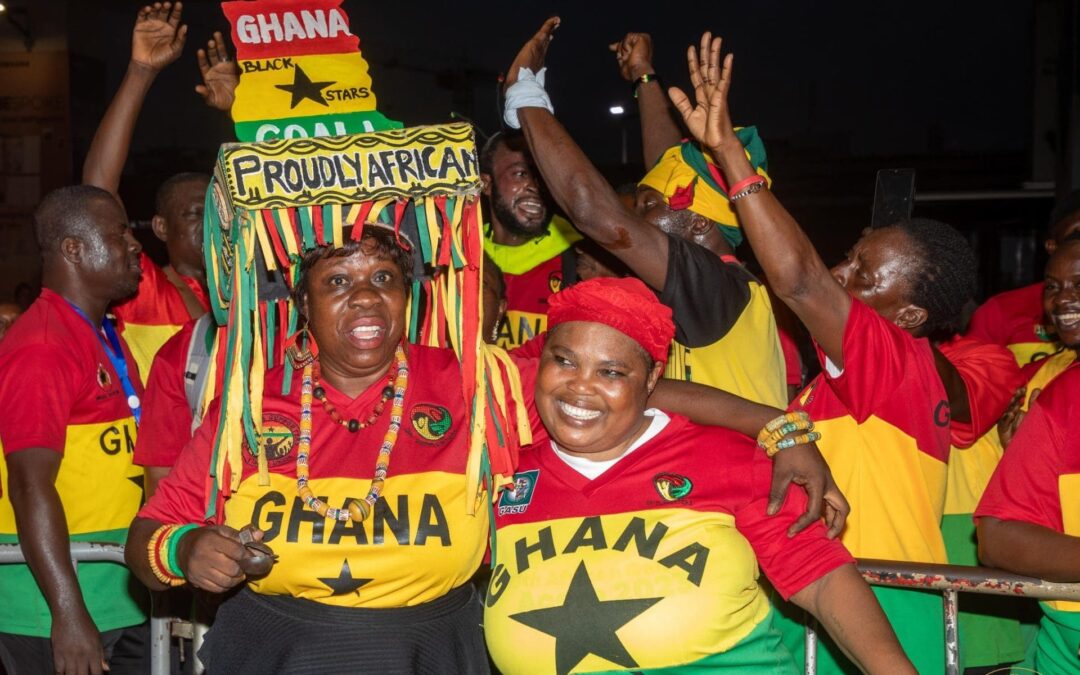
WOSPAG members were among the crowd that welcomed the returning heroes at Kotoka International Airport on Monday, where cheers and patriotic songs echoed through the terminal.
With their eyes now set on the 2026 FIFA Women’s World Cup qualifiers, the Black Queens march forward with renewed hope—and the nation firmly behind them.

by Emmanuel Atanga | Jul 29, 2025 | AFCON, Africa, Ghana, Nigeria, Soccer
In the heart of a heated May evening, the Unity Cup delivered more than just football—it reignited a rivalry that runs deeper than goals or trophies. Wilfred Ndidi, Nigeria’s dependable midfield engine, has now shed light on the emotional intensity behind the Super Eagles’ crucial win over Ghana.
Reflecting on the encounter during an episode of The Culture League podcast, Ndidi didn’t mince words:
> “The Ghana game was more about settling our ego; we had to win that one. It didn’t matter if we lost the final—we just had to beat Ghana.”
It wasn’t just another fixture. For Ndidi and his teammates, the clash wasn’t solely about silverware. It was about pride, history, and making a statement. The 28-year-old Leicester City star, who featured prominently in both games against Ghana and Jamaica, played a pivotal role in leading Nigeria to their third Unity Cup title.
Ndidi also praised the strong turnout of fans from Ghana and Jamaica while noting Nigerian fans seemed more cautious—waiting to see how the team would fare before coming out in numbers.
> “The turnout was good. Ghanaians came out, Jamaicans came out. I feel like Nigerians, we wanted to see how it went first. Maybe next time, the turnout will be bigger.”
For Ndidi, the Unity Cup was more than a tournament—it was a statement of identity, a reflection of shared history, and, above all, a reminder that when Nigeria faces Ghana, it’s never just a game.