by Emmanuel Atanga | Jan 31, 2026 | Africa, Europe, Ghana, International, Soccer
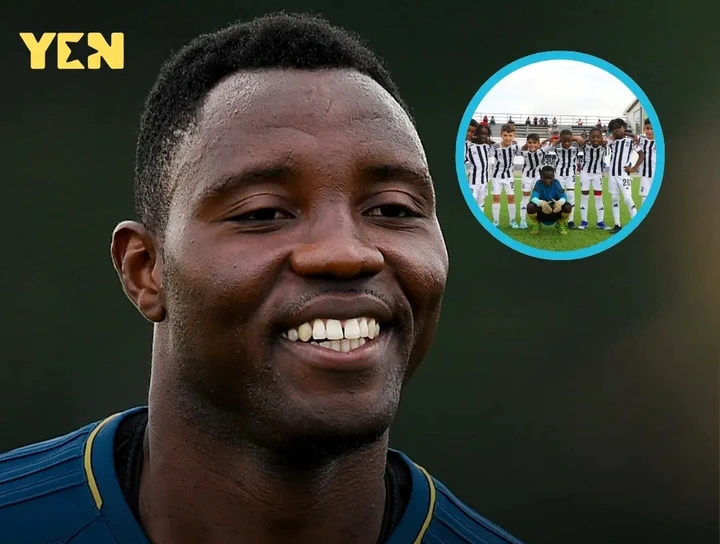
Former Ghana international Kwadwo Asamoah has opened the doors to his impressive Juventus Academy in Ghana, offering fans a rare glimpse into a project aimed at developing the next generation of football talent.
Inspired by the professional standards of Italian giants Juventus, the academy boasts top-quality football pitches, modern training equipment, and well-maintained facilities comparable to those found at elite clubs abroad. A video tour of the complex revealed a carefully planned environment designed to help young players grow both on and off the pitch.
Asamoah, who enjoyed a successful European career with Juventus and Inter Milan, explained that the academy represents his way of giving back to Ghana—the country that laid the foundation for his football journey. His vision is to provide young footballers with access to professional coaching and world-class resources that can help unlock their potential.
Beyond technical training, the academy adopts a holistic development model, incorporating fitness programs, nutrition guidance, and life-skills education. Parents and visitors have praised the level of investment and attention to detail, describing the initiative as a game-changer for grassroots football in the country.
The academy has already sparked excitement among fans and aspiring players nationwide, with many viewing it as a symbol of hope and opportunity.
Observers believe the project could significantly raise football standards in Ghana by exposing young talents to advanced coaching methods previously unavailable locally.
More than just a football school, Kwadwo Asamoah’s Juventus Academy stands as a testament to professionalism, ambition, and commitment to youth development—an initiative poised to leave a lasting impact on Ghanaian football.
by Emmanuel Atanga | Jan 31, 2026 | Africa, Europe, Ghana, International, Soccer
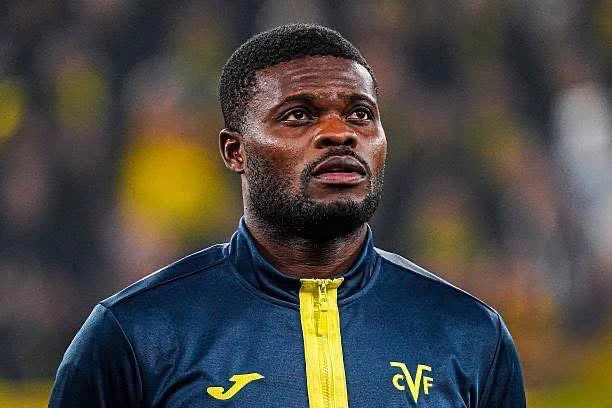
Thomas Partey’s representatives have hit back strongly at comments made by Villarreal head coach Marcelino García, expressing dissatisfaction with what they described as unfair public criticism of the Ghana international.
The 32-year-old midfielder joined the Yellow Submarines last summer on a two-year deal after leaving Arsenal as a free agent. However, his time at the Estadio de la Cerámica has been challenging, with Partey struggling to rediscover the form he showed during his spells at Atlético Madrid and in the Premier League.
Since his arrival, Partey has found consistent minutes hard to come by, often being used as a substitute and currently sitting behind 17-year-old Carlos Marcia in Villarreal’s midfield hierarchy. His limited role prompted Marcelino to openly question the player’s level, suggesting Partey has not met expectations and is no longer the same player he once knew. The coach also implied that off-field issues had affected the midfielder’s mental readiness to perform at the highest level.
In response, Partey’s camp strongly rejected those claims, accusing the coach of publicly shifting blame onto the player. They explained that Partey has been dealing with ongoing groin and knee problems—issues they insist the coaching staff are fully aware of—and believe the matter should have been handled internally rather than in the media.
Despite his struggles, Partey has still featured in 19 matches across all competitions this season, making 14 appearances in La Liga and five in the UEFA Champions League.
With interest from Saudi clubs persisting and his role under Marcelino appearing limited, speculation continues to grow that Partey’s stay at Villarreal may not extend beyond this season. The midfielder will also be hoping to regain full fitness and form in time to push for a place in Ghana’s Black Stars squad for the 2026 FIFA World Cup.
by Emmanuel Atanga | Jan 31, 2026 | Africa, Nigeria, Soccer, World Cup
The Nigeria Football Federation (NFF) has expressed confidence in a favourable outcome from FIFA in its ongoing dispute with the Democratic Republic of Congo over alleged use of ineligible players during November’s 2026 World Cup play-off final.
Nigeria’s World Cup ambitions suffered a major blow after the Super Eagles lost to DR Congo on penalties at Morocco’s Moulay Hassan Stadium, seemingly confirming a second consecutive absence from the tournament. Weeks after the defeat, the NFF lodged a formal complaint with FIFA, asserting that DR Congo violated eligibility rules.
Speaking to Sportsblog247.com, NFF General Secretary Dr. Sanusi Mohammed emphasized that the federation would not pursue a case without strong conviction.
“We don’t venture into what we know is an exercise in futility,” he said. “As far as we are concerned, we have a good case and we are waiting for what FIFA will say regarding the complaints we have logged.”
FIFA has yet to release an official statement, leaving both Nigeria and DR Congo in suspense. The delay has sparked debate among fans and pundits, with former Super Eagles captain and coach Sunday Oliseh questioning the decision to pursue administrative action rather than accept the on-field result.
The NFF maintains that its petition aligns with FIFA regulations, particularly rules on player eligibility and dual nationality.
DR Congo has denied any wrongdoing and remains set to compete in the inter-confederation play-off tournament in Mexico on 26 and 31 March 2026, where two final World Cup spots will be decided.
They are scheduled to face the winner of the New Caledonia vs. Jamaica tie, although the lineup could change depending on FIFA’s ruling.
If Nigeria’s appeal is upheld, the Super Eagles could be reinstated, reopening a pathway to the 2026 FIFA World Cup, co-hosted by Canada, Mexico, and the United States.
by Emmanuel Atanga | Jan 31, 2026 | AFCON, Africa, Nigeria, Soccer
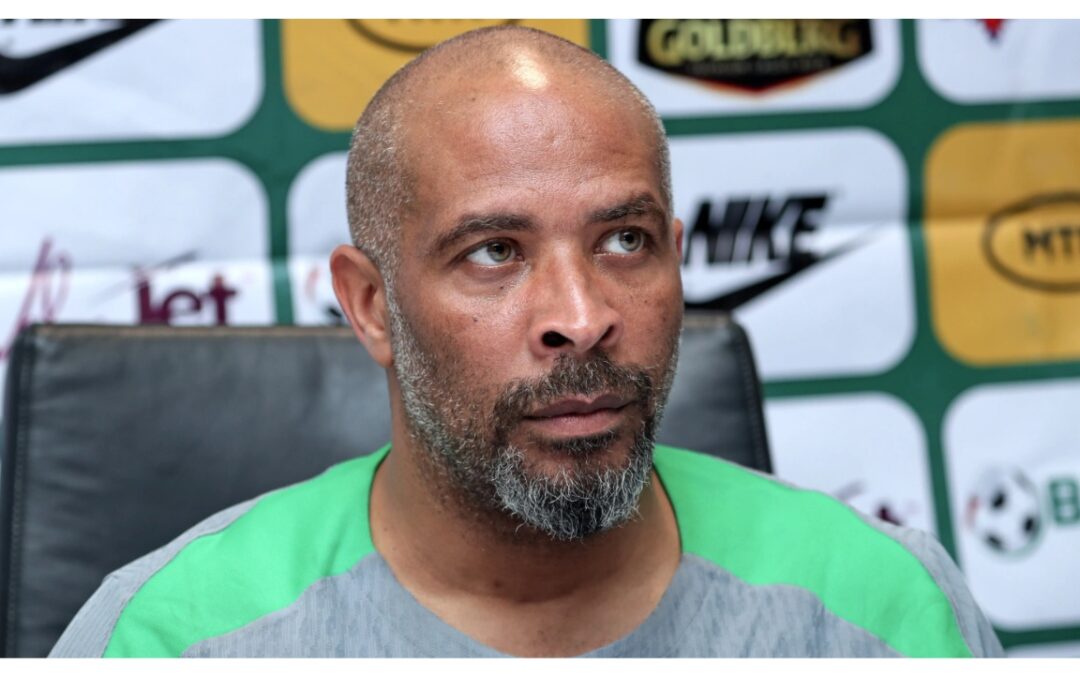
The absence of Nigeria Premier Football League (NPFL) players from the Super Eagles squad for the 2025 Africa Cup of Nations has sparked criticism, with NFF Technical Director Augustine Eguavoen expressing disappointment over the snub.
Speaking to Footy Africa, Eguavoen questioned why head coach Eric Chelle failed to include any home-based players in the AFCON squad. “Some players in the team may not even get a minute of action, so why couldn’t we include a few players from the local league? At least three or four would have been better,” he remarked.
The debate over domestic players in the Super Eagles is long-standing, with many football analysts arguing that the NPFL’s current crop of talent is not at par with their foreign-based counterparts. Victor Oluwafemi, Content Lead at Football 411, told Sportsblog247.com that the NPFL has declined in quality since the days of players like Sunday Mba and Godfrey Oboabona, making it difficult for home-based stars to compete for national team spots.
Oluwafemi also criticized Eguavoen, noting that he himself did not prioritize local players when coaching the Eagles, highlighting that only John Obu and Ezenwa have featured from the NPFL since 2019. He described Eguavoen’s public comments as “performative” and argued that criticism should be directed toward improving the league rather than questioning Chelle’s selections.
While acknowledging past NPFL inclusions such as Harcourt, Oluwafemi stressed that Chelle should be allowed to choose the best players for Nigeria, noting that the domestic league’s current quality does not yet justify widespread inclusion in the national team.
by Emmanuel Atanga | Jan 31, 2026 | AFCON, Africa, Nigeria, Soccer
Nigeria’s disappointing outing at the 2025 Africa Cup of Nations Championship (CHAN) in Morocco reignited fierce debate over the relevance of home-based players to the Super Eagles. After a poor Group D campaign marked by blunt attacking play and costly defensive lapses, the CHAN Eagles exited early following defeats to Senegal and Sudan, rendering a final win over Congo meaningless.
The team’s struggles drew heavy criticism from fans, many of whom blamed questionable selection choices—particularly the decision to rely heavily on players from a single NPFL club, Remo Stars. The backlash was swift and severe, with calls for some players to be permanently excluded from future national team consideration.
This failure forced even long-time advocates of local player inclusion to reconsider their stance. Historically, Nigeria’s greatest successes—AFCON titles in 1994 under Clemens Westerhof and 2013 under Stephen Keshi—were built around strong home-based cores.
However, recent underwhelming performances in CHAN and CAF inter-club competitions have cast doubt on whether today’s NPFL players can match the standards set by past legends.
Former Super Eagles star and African Footballer of the Year, Victor Ikpeba, added fuel to the debate by insisting that the senior national team is “too big” for home-based players, backing coach Eric Chelle’s decision to exclude them from the 2025 AFCON squad. He argued that the Super Eagles is not a platform for experimentation.
That view, however, was challenged by analyst Segun Agbede (“The Guru”) and others who maintain that dismissing local players outright is unfair and damaging. While acknowledging the NPFL’s organisational shortcomings and limited exposure for its players, critics of Ikpeba’s stance argue that talent still exists and that some foreign-based invitees have also failed to justify their selection.
Questions were also raised about Chelle’s squad management, as several foreign-based players travelled to Morocco only to remain unused. In such cases, it was argued that including promising local players—even if they didn’t play—could have provided valuable exposure and motivation.
Ultimately, the argument is not that all NPFL players are ready-made Super Eagles stars, but that the league is not devoid of talent. Poor administration has masked potential, and sweeping condemnation risks destroying player morale and future development. Constructive criticism is necessary, but writing off local players entirely could do more harm than good.