by Emmanuel Atanga | Jan 30, 2026 | AFCON, Africa, Nigeria, Soccer
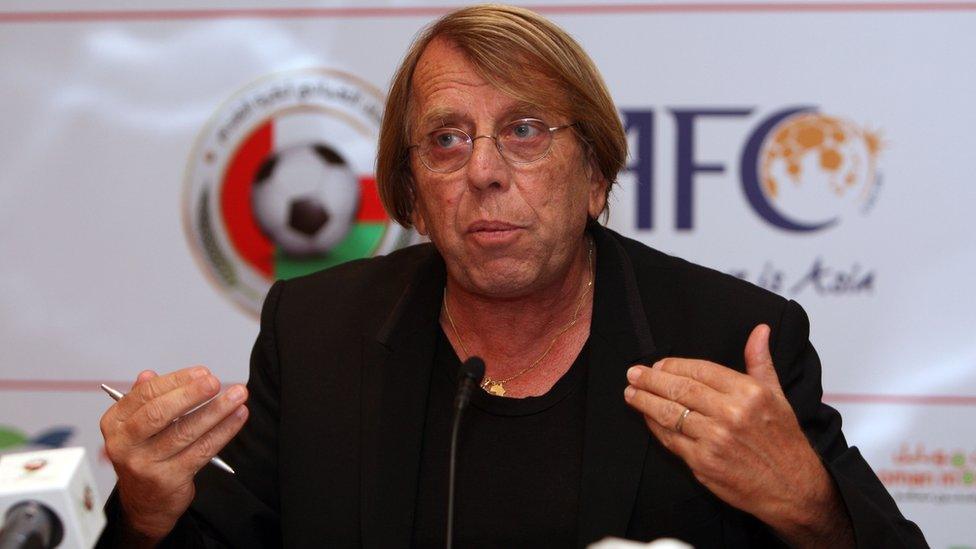
Claude Le Roy, the legendary coach who won the Africa Cup of Nations in 1988, has revealed how Nigeria indirectly helped Senegal claim the 2025 AFCON title by tiring out Morocco in the semifinals.
Le Roy described Morocco as the best team of the tournament overall but said Senegal were superior in the final because the Atlas Lions were exhausted after a grueling semifinal clash against the Super Eagles that lasted over two hours and ended in a penalty shootout. Nigeria ultimately lost 4-2, with Samuel Chukwueze and Bruno Onyemaechi having their spot-kicks saved.
The extended semifinal exerted a significant toll on Morocco, Le Roy explained, leaving them slower and less focused in the final against Senegal.
Nigeria, despite missing out on the final, were arguably the tournament’s most consistent team, winning all five of their matches and scoring the most goals, a total of 14. Stars Ademola Lookman and Victor Osimhen were involved in 13 of those goals.
Le Roy highlighted Nigeria’s defensive discipline, which stifled Morocco during the semifinal, although the Super Eagles struggled to create many chances in attack.
When asked about the standout teams of AFCON 2025, Le Roy told Canal+, “The best team of this AFCON overall was Morocco, and the best team in the final was Senegal.
The win for Senegal shows that they delivered when it mattered most. Morocco tried hard against Nigeria, but that semifinal match affected them in the final.”
In the third-place playoff, Nigeria defeated Egypt 4-2 on penalties, with goalkeeper Stanley Nwabali playing a pivotal role by saving key efforts from Mohamed Salah and Omar Marmoush.

by Emmanuel Atanga | Jan 30, 2026 | AFCON, Africa, Soccer
The 2025 Africa Cup of Nations (AFCON) final, played on January 18, 2026, in Rabat, delivered drama, controversy and high tension as Senegal defeated host nation Morocco 1-0 to lift their second AFCON title in five years.
Four-time African champions Ghana were notably absent from the tournament after failing to qualify.
The final nearly ended in controversy after a late penalty was awarded against Senegal in the closing stages of extra time, shortly after midfielder Papa Gueye had given Senegal a 94th-minute lead. In protest, Senegalese players briefly walked off the pitch.
In a moment of strong leadership, Sadio Mane convinced his teammates to return to the field about 17 minutes later. The tension eased when Senegal goalkeeper Edouard Mendy saved the penalty taken by Morocco’s top scorer Brahim Diaz.
Mane was later named Player of the Tournament, further cementing his status as one of Africa’s greatest footballers and role models.
Beyond football, Mane’s story continues to inspire. Raised in the small Senegalese village of Bambali, which had a population of about 2,000 people before his rise to fame, Mane has invested heavily in improving lives back home. In 2019, he funded the construction of a secondary school worth over £250,000, and in 2021 he financed a hospital project costing about £640,000.
His humble lifestyle also gained global attention when he was seen using a cracked phone despite earning millions annually. Mane explained that instead of spending money on luxury items, he prefers to support his community by building schools, providing food, clothing and monthly financial support to struggling families in his region.
Mane’s life philosophy reflects the belief that wealth should be used to support others rather than for personal luxury. His humanitarian efforts have made him not only a football icon but also a symbol of social responsibility across Africa.
His story serves as a reminder to leaders, wealthy individuals and communities about the importance of giving back to society and using success to uplift others.
Now at 33, Mane continues to expand his charitable efforts while remaining an influential figure in African football. His leadership during AFCON 2025 and his lifelong commitment to helping others have strengthened his legacy both on and off the pitch.
by Emmanuel Atanga | Jan 30, 2026 | Africa, Europe, Ghana, International, Soccer
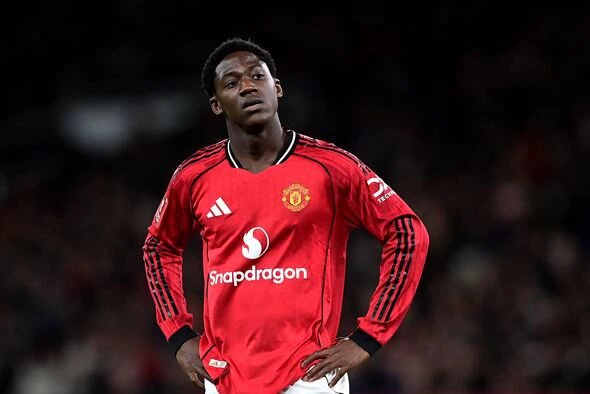
Manchester United have been advised to hold off on contract negotiations with midfielder Kobbie Mainoo, with former striker Louis Saha urging the club to prioritise the youngster’s development and consistent game time.
Mainoo has recently returned to the starting lineup under manager Michael Carrick after struggling for regular minutes earlier in the season under former boss Ruben Amorim. During Amorim’s tenure, the England international faced strong competition in midfield, particularly alongside captain Bruno Fernandes, which sparked speculation about a possible January exit.
Since Carrick’s arrival, however, Mainoo has shown promising form, delivering strong performances in Premier League wins against Manchester City and Arsenal.
Despite this, Manchester United are reportedly keen to open discussions over an improved contract, even though his current deal runs until 2027.
Saha believes the club and player should focus solely on football for now. He stressed that Mainoo must continue improving, scoring more goals, providing assists and building consistency rather than getting distracted by contract negotiations or transfer speculation.
The former United forward also suggested that Mainoo needs a sustained run of matches to prove himself, adding that long-term rewards should come naturally if his performances continue to improve.
Saha also reflected on Mainoo’s time under Amorim, noting that while the Portuguese coach had a different tactical vision, it did not mean the midfielder lacked quality. He explained that different managers require different profiles, and tactical decisions are part of football development.
There is growing belief that the managerial change could help unlock Mainoo’s full potential, as Manchester United look to rebuild stability and consistency across the squad.
by Emmanuel Atanga | Jan 30, 2026 | Africa, Europe, Ghana, International, Soccer
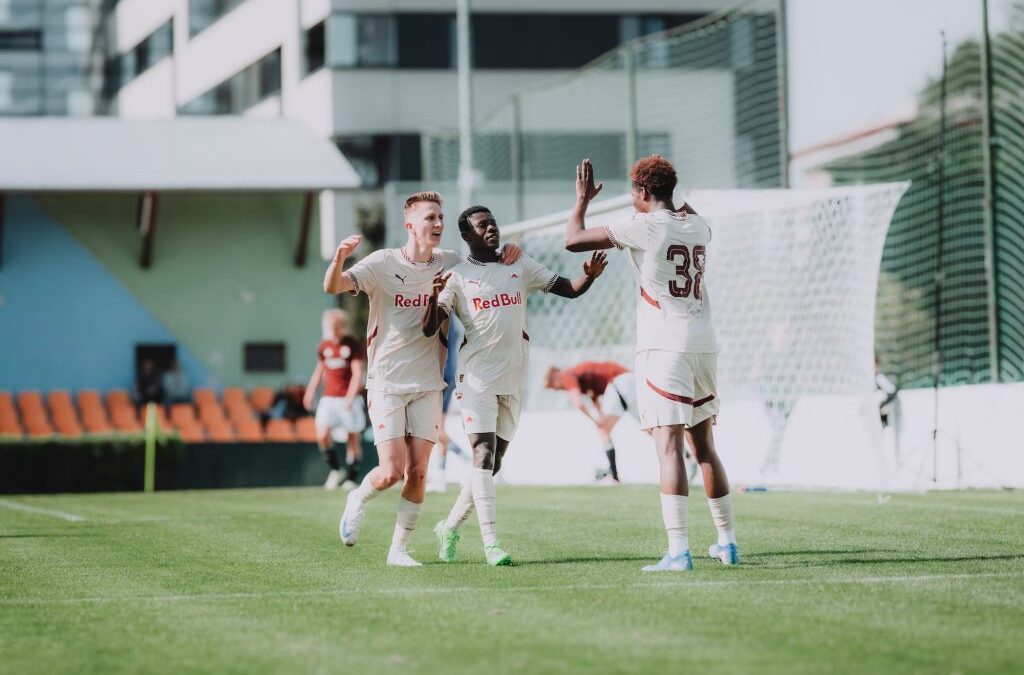
Ghanaian winger Edmund Baidoo registered an assist for Red Bull Salzburg, but the Austrian side suffered a narrow 3-2 defeat to Aston Villa in Thursday night’s UEFA Europa League clash.
Salzburg started strongly and took the lead in the 33rd minute thanks to Baidoo’s creativity. The Ghana international showed great vision to find Karim Konate inside the penalty area, and the striker finished calmly from close range to give the visitors the advantage.
The Austrian club extended their lead shortly after halftime when Kerim Alajbegovic set up Moussa Kounfolo Yeo, who slotted home to make it 2-0 and put Salzburg in control of the game.
Aston Villa, however, mounted a strong comeback. Emiliano Buendia played a well-timed through pass to Morgan Rogers, who scored in the 65th minute to cut the deficit.
Villa equalised in the 76th minute when Matty Cash delivered a cross into the box and Tyrone Mings rose highest to head home and level the score.
The home side completed the turnaround late on. In the 87th minute, Kadan Young found Jamaldeen Jimoh-Aloba just outside the box, and the youngster curled a fine strike into the bottom corner to secure a 3-2 win for Aston Villa.
The result sees Baidoo and Salzburg eliminated from this season’s Europa League.
by Emmanuel Atanga | Jan 30, 2026 | Africa, Europe, Ghana, International, Nigeria, Soccer, USA, World Cup
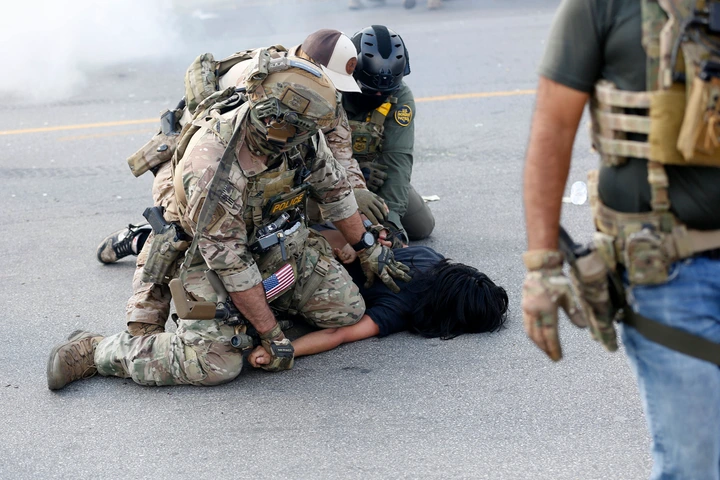
Calls for a potential boycott of the 2026 FIFA World Cup are becoming louder as political tensions, immigration policies and security concerns begin to overshadow preparations for football’s biggest global event.
When FIFA awarded hosting rights to the United States, Canada and Mexico in 2018, the idea of boycotting the tournament seemed almost impossible. However, shifting global politics and policy decisions have since created uncertainty around the competition, especially regarding matches scheduled in the United States.
Recent developments, including strict visa policies and travel restrictions, have sparked concerns among fans and football officials. Reports indicate that some countries — including Senegal, Ivory Coast, Iran and Haiti — have faced entry challenges due to U.S. immigration rules, creating fears that supporters may struggle to attend matches even if teams are allowed entry.
In some cases, tensions have already affected football events. Iran, for example, previously threatened to boycott a World Cup-related event after visa applications for key officials were denied, raising concerns about political interference in football activities.
Political leaders and football figures have also added to the conversation. Former FIFA president Sepp Blatter has voiced support for fans considering a boycott of U.S.-hosted matches, while some European officials have suggested that withdrawing from the tournament could be considered under certain political circumstances.
At the same time, host city leaders have attempted to reassure supporters. Officials in Los Angeles have publicly urged the U.S. government to guarantee that visiting fans will be welcomed and protected during the tournament.
Despite the growing debate, history suggests that large-scale sporting boycotts are rare. Even during politically tense tournaments in the past, most nations ultimately chose to compete. For now, many governments maintain that sport should remain separate from politics, meaning a full boycott of the 2026 World Cup remains unlikely.
Still, with the tournament approaching, the discussion highlights how global politics can shape even the world’s most unifying sporting events.