
by Silas Boahene | Apr 23, 2024 | Africa, Basketball, International, Nigeria, USA
The Basketball Africa League (BAL) is now in its fourth season and has become a must-attend event on the continental basketball scene, with interest in the league continuing to grow among sports enthusiasts.
It’s a boon for the continent’s talents, such as Thierry Darlan, a young Central African who graduated from the NBA Academy in Dakar.
“It’s really good for African basketball. As you can see, there are a lot of people here, and they’re talking about it everywhere. Even the Americans I played for say that basketball in Africa is evolving a lot more because there are prospects arriving, there’s Kaman, there’s El Weish, and lots of others. So it’s good exposure for young Africans,” says the Bangui SC player.
But beyond shaping the dreams of these young basketball players, the BAL gives another dimension to African basketball. The players involved are almost unanimous that the competition is revolutionizing the sport in several ways.
For example, the African champion, winner of the Basketball Africa League, made a good showing at the 2023 Intercontinental Cup, winning the competition for the first time in its history.
“Our national teams who took part in the World Cup also showed a high level of basketball for the first time. And this is part of our expectations of the Basketball Africa League. This is what we expect from the Africa Basketball League,” explains Hesham Elhariri, President of FIBA Africa Zone V.
Yet the revolution set in motion by the BAL goes beyond the championship. As well as providing support to the federations, the League is also making a difference in terms of infrastructure, in addition to its economic contribution. Last year alone, it brought in more than 3 billion CFA francs (5 million dollars) to Senegal through transport, hotels, shows, and many other sectors.
“Today, African talent can be identified on the continent, develop on the continent, and play professionally without having to leave the continent. And if we look, for example, at the partnership with the Rwanda Development Board, which has been renewed for 5 years, it means that there is a real impact on the economy and on that country’s objective of promoting Rwanda as a destination. We want to do the same thing in Senegal and South Africa,” explains Amadou Gallo Fall, President of the African Basketball League.
Africanews correspondent Wahany Sambo reports that the Basketball Africa League is today more than just a sport. “It’s social, it’s training, but above all it’s opportunities for young Africans to express their talent and open themselves up to the world,” says Sambo.
by Silas Boahene | Apr 23, 2024 | Africa, Athletics, International
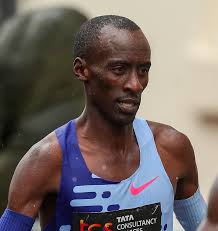
An autopsy has revealed that Kelvin Kiptum, the Kenyan world marathon record holder, died from severe head injuries sustained in a car crash.
The athlete’s life was cut short in a late-night accident near his home in north-western Kenya on 11th February, in which his Rwandan coach, Gervais Hakizimana, also died.
Kiptum’s death came just months after he set a men’s world record of 2 hours and 35 seconds in the Chicago Marathon.
The 24-year-old was reportedly planning a bid to run the 42-kilometer distance in under two hours in the Rotterdam marathon in April, a feat that has never been achieved before in open competition.
The late star runner will be laid to rest in his home village on Friday in what is expected to be a state event attended by Kenyan President, William Ruto.
by Silas Boahene | Apr 23, 2024 | Africa, Athletics, International
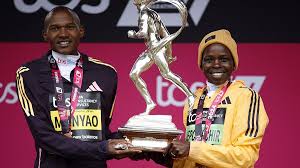
Kenyan Peres Jepchirchir established a world record for a women-only marathon as she clinched victory in the London Marathon on Sunday (Apr. 21).
Her primary focus might have been securing a chance to defend her Olympic gold rather than setting a world record for a women-only marathon. However, she achieved both.
Jepchirchir demonstrated the strongest finish, leaving her rivals behind to sprint alone down the final stretch in front of Buckingham Palace.
The 30-year-old athlete finished in 2 hours, 16 minutes, and 16 seconds, with Tigst Assefa in second place and Joyciline Jepkosgei in third.
Although her time was more than 4 minutes slower than Assefa’s overall women’s world record set in Berlin last year, it was the fastest time ever in a women-only marathon, surpassing the mark of 2:17:01 set by Mary Keitany in London in 2017. The elite women’s field in London starts about 30 minutes ahead of the elite men.
More importantly for Jepchirchir, this achievement should solidify her place on Kenya’s Olympic team for Paris. She stated that the London Marathon was the final qualifying race before Kenya’s Olympic selectors pick their team for Paris.
“I was not expecting to run that time,” Jepchirchir said. “I was trying to work extra hard to defend my title in the Olympics.”
It was also a bit of redemption for Jepchirchir after finishing third in London last year, when she was beaten in a similarly tight finish and came in five seconds behind winner Sifan Hassan.
Coming out on top in a late sprint this time will only boost her confidence going into Paris.
“I think it helps me a lot,” she said. “For me, when I reach 800 meters (left), it’s difficult to defeat me.”
Another Kenyan won the men’s race.
Kenyan Alexander Mutiso Munyao completed the men’s 42 km race in 2 hours, 4 minutes, and 1 second. Ethiopia’s Kenenisa Bekele finished second, and Britain’s Emile Cairess third.
The Kenyan double win came on the day the London Marathon remembered last year’s champion.
Kenyan Kelvin Kiptum died in a car crash in February aged 24.
by Silas Boahene | Apr 23, 2024 | Africa, Athletics, International
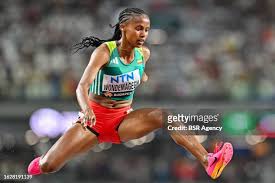
An Ethiopian distance runner, who made it to the 3,000-meter steeplechase final at the Tokyo Olympics and narrowly missed the world championship podium last year, has been banned for five years after testing positive for two banned substances.
Zerfe Wondemagegn admitted to breaking anti-doping rules after samples she provided showed traces of testosterone and another substance, EPO, which can enhance athletes’ blood oxygen transport, according to a ruling by the Athletics Integrity Unit published on Monday.
Wondemagegn finished eighth at the Tokyo Olympics in 2021 and fourth at the 2023 world championships in Budapest. Two of the three samples in her case were taken while she was in Hungary for the event, and she has been disqualified from the competition.
The AIU ruling stated that it received e-mailed testimony from a doctor stating Wondemagegn had been given EPO as medicine to treat severe anemia and a kidney infection, but it “remained satisfied” she had broken anti-doping rules. The organization also noted it had received a signed admission from the athlete last week.
Wondemagegn’s case is the latest in a series of doping instances in distance running.
The 2022 world champion in women’s steeplechase, Norah Jeruto, is facing a doping hearing in June, five weeks before the Paris Olympics. World Athletics is appealing against an earlier decision to clear the runner, who was born in Kenya and competes for Kazakhstan. She has argued that ulcers and a bout of COVID-19 can explain irregular blood test results.
Also on Monday, the AIU reported a three-year ban for Kenyan road runner Celestine Chepchirchir, who tested positive for testosterone.
by Silas Boahene | Apr 21, 2024 | Africa, Europe, International, Soccer, USA, World Cup
Former Ivory Coast and Chelsea striker Didier Drogba expressed on Friday that the revamped FIFA Club World Cup offers a “great opportunity” for African teams to become world champions.
Drogba was endorsing FIFA’s plans for the tournament next year, which includes 32 teams playing in the United States.
“There’s already the FIFA World Cup, but the World Cup is every four years and not everybody has the chance to participate, so it could be a great benefit for, let’s say, so-called smaller teams. With the FIFA Club World Cup, it makes things a bit more recurrent, which means there’s more competition every year, there are more games, and there are more opportunities for players to become world champions. Imagine the feeling for someone who plays here in Côte d’Ivoire or anywhere in Africa being a world champion in front of all the big clubs, like Chelsea, Barcelona, [Real] Madrid, etc.”
The total includes four teams from Africa, Asia, and America, six from South America, plus 12 European clubs.
“When you look at the normal previous FIFA Club World Cup, when you’ve seen TP Mazembe, for example, being in the final, at the time it was huge. For a team like that in Africa to win the FIFA Club World Cup or the Clubs World Cup competition, it would be, like I said, a huge achievement.”