
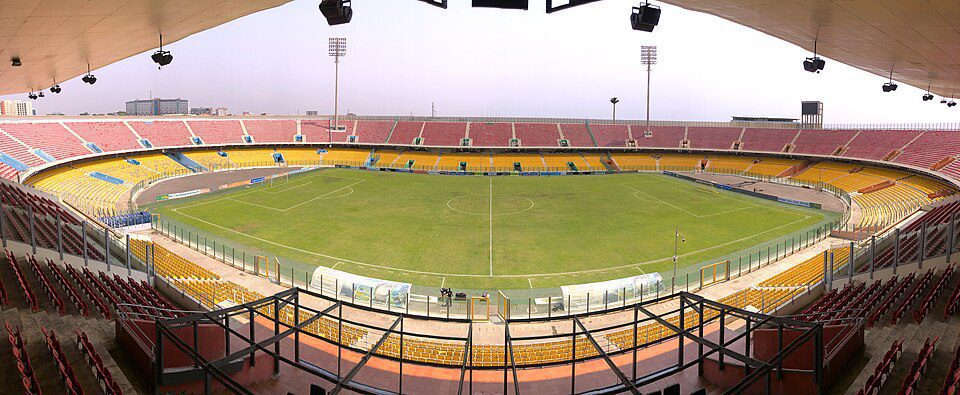
In a recent address, former President John Dramani Mahama reaffirmed his commitment to enhancing Ghana’s sports infrastructure, promising the construction of new stadiums across the six newly created regions and other underserved areas. While the idea of new sports facilities is commendable, it raises a pressing question—what about the countless facilities already lying in neglect?
Years ago, the National Youth Authority (NYA) and the National Sports Authority (NSA) collaborated to establish ten sports resource centers in towns like Ho, Wa, Axim, Dormaa, Dunkwa-on-Offin, Kaneshie, Navrongo, Yendi, and Nyinahini. These centers were supposed to offer modern sports amenities, counseling services, and entrepreneurship hubs. Today, many of these projects have either stalled, been forgotten, or fallen into disrepair.
So where did it all go wrong? What happened to the dream of nurturing youth talent through these facilities? What’s the fate of the incomplete ones? And for those completed, where is the maintenance culture we promised?
Ghana’s problem isn’t the lack of stadiums; it’s the dire state of the existing ones. Across the country, sports infrastructure is crumbling—stadiums are falling apart, facilities are obsolete, and communities that should be thriving are left wanting.
If Ghana is serious about elevating sports, the focus must shift from piecemeal refurbishments to full-scale remodification. Here’s why:
1. Outdated Structures Need Overhauling, Not Painting
Most stadiums in Ghana were built decades ago with outdated designs. Their seating arrangements, drainage, roofing, and emergency exits are structurally inadequate by today’s standards. A coat of paint won’t fix that—only a complete redesign will.
> “Several stadiums in Africa, including those in Ghana, were built in eras where capacity and safety standards were different. These structures now require holistic redesigns to align with modern codes” — FIFA, 2021.
2. Failing to Meet International Standards
If Ghana dreams of hosting major CAF or FIFA events, stadiums must meet global standards for accessibility, athlete welfare, media facilities, and security. Right now, most fail woefully on these counts.
> “Sporting facilities that do not meet international regulations are ineligible to host global or continental tournaments” — CAF, 2023.
3. Left Behind by Technology
Modern stadiums come with high-speed Wi-Fi, smart ticketing, HD screens, and VAR technology. Ghana’s stadiums don’t even come close. Remodification—not minor tweaks—is the answer.
> “Smart stadiums are the future of fan engagement. Without foundational changes, African stadiums cannot compete” — PwC Sports Outlook, 2022.
4. Poor Fan Experience Is Driving People Away
Inadequate restrooms, terrible seating, and no proper fan zones—this is the story of too many Ghanaian stadiums. Fans deserve more than just a seat; they deserve an unforgettable experience.
> “Modern fans demand more than just a seat; they want a holistic, immersive experience” — Deloitte, 2022.
5. Lost Revenue from Commercial Blind Spots
Modern stadiums double as business hubs with shops, hotels, restaurants, and gyms, running year-round. Ghana’s old stadiums sit idle after matches, bleeding potential revenue.
> “A stadium that cannot operate 365 days a year is a liability” — KPMG Sports Advisory, 2023.
6. The Green Revolution Has Skipped Our Stadiums
With the world turning to eco-friendly designs, Ghanaian stadiums remain energy-inefficient and environmentally unfriendly. Solar panels, water recycling, and green materials should be a baseline—not an afterthought.
> “Green stadiums are part of global climate and ESG commitments” — UNEP, 2021.
7. Safety Is Still an Afterthought
Emergency exits, evacuation routes, fire safety, and crowd management tools are either non-existent or ineffective in many stadiums. This is a disaster waiting to happen—unless remodification is prioritized.
8. Beyond Sports: The Need for Multipurpose Use
Globally, stadiums host concerts, conferences, and community events. Ghana must remodel its stadiums into multi-purpose spaces that serve more than just matchday needs.
> “Stadium remodification enables increased monetization through diverse programming” — EY Sports Facilities Report, 2021.
Refurbishment vs. Remodification: A Quick Snapshot
Feature Refurbishment Remodification
Scope Cosmetic fixes Structural overhaul
Tech Upgrade Minimal Full integration
Revenue Models Limited Multifunctional & diverse
International Compliance Partially compliant Fully compliant
Fan Experience Basic improvement Total transformation
Sustainability Neglected Eco-friendly, future-proof
Safety Surface repairs Complete redesign for safety
Conclusion: Ghana must abandon the “patch-and-paint” approach and instead reimagine its sports stadiums. Without radical remodification, we will continue to lag behind on the continental and global stage—both in sports development and economic opportunity.
It’s time for a bold, ambitious stadium revolution—not cosmetic touch-ups.




0 Comments