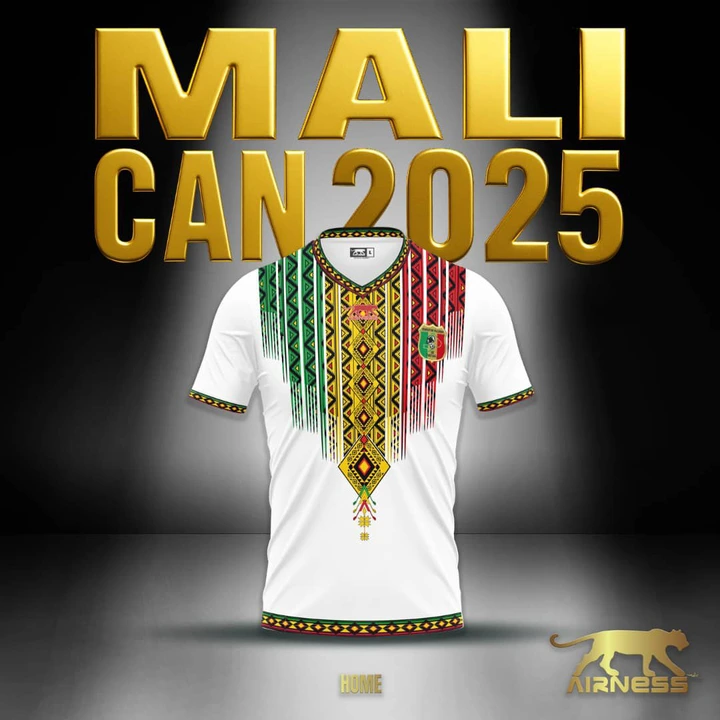
One of the quiet pleasures of the Africa Cup of Nations is discovering football as culture. Beyond tactics and results, AFCON is about identity. At this year’s tournament in Morocco, that realization came vividly through the Malian national team’s home jersey. Designed by Airness, it is bold, colorful, and unmistakably African — a predominantly white kit enriched with heritage-inspired details. Naturally, it sparked the urge to own it.
That proved impossible.
Across airports, fan zones, and street markets, one reality stood out: only Morocco’s jersey was available. The absence of kits from Mali, Cape Verde, Angola, or even Nigeria revealed a truth far more significant than any scoreline — African football is overlooking a billion-dollar commercial opportunity.
Policy, Not Chance: The Morocco Model
Morocco’s dominance of the AFCON 2025 jersey market is not accidental. It is the product of clear policy. The Moroccan federation treats football kits as national merchandise, not ceremonial attire.
Production is planned early, distribution is coordinated, and availability is guaranteed. In cities like Rabat and Casablanca, the national shirt is a strategic asset, not an afterthought.
Most African federations do not operate with this mindset.
The Tragedy of the Invisible Kit
The absence of Mali’s jersey is not a design failure; it is a governance failure. Like many federations, Mali’s does not treat football as a retail ecosystem. Kits are produced in limited numbers, released too late, and distributed narrowly to players and officials.
Football fandom thrives on emotion. Just as Manchester City fans forever associate Sergio Agüero with a defining moment, AFCON fans connect instantly with tournament runs. When a fan cannot buy a jersey at the height of that emotion, the moment — and the revenue — is lost forever. African football repeatedly misses these emotional “cash register moments.”
The Myth of the Brand Problem
Blaming global manufacturers like Nike, Puma, or Adidas misses the point. From their perspective, Africa presents persistent challenges: weak retail infrastructure, poor protection against counterfeits, and a lack of year-round commercial planning by federations.
As a result, African teams are often treated as branding showcases — photographed, promoted, and then quietly withdrawn — rather than serious consumer markets.
Many federations negotiate kit deals as short-term sponsorships instead of long-term commercial partnerships. In chasing immediate cash, they give away valuable retail rights. Without clauses for digital sales, local licensing, or guaranteed distribution, fans are left with a bitter irony: Africans often have to import their own national identity from shops in London or Paris.
CAF’s Silent Blind Spot
CAF’s official AFCON 2025 store is a step forward, but it barely scratches the surface. Eight retail points in Rabat cannot serve a continental audience. A sustainable fix requires structural reform: multi-country retail hubs at every venue, a centralized e-commerce platform for all participating teams, and clear merchandising standards as part of tournament qualification.
The Bottom Line
Africa produces world-class players, world-class designs, and unmatched passion. Yet even in 2026, fans still struggle to buy the shirts of the teams they love. The “jersey you can’t buy” has become a symbol of wasted potential. Until African football learns to sell its own identity, it will continue to undersell its future.




0 Comments