by Emmanuel Atanga | Jun 27, 2025 | Africa, Europe, Ghana, International, Soccer
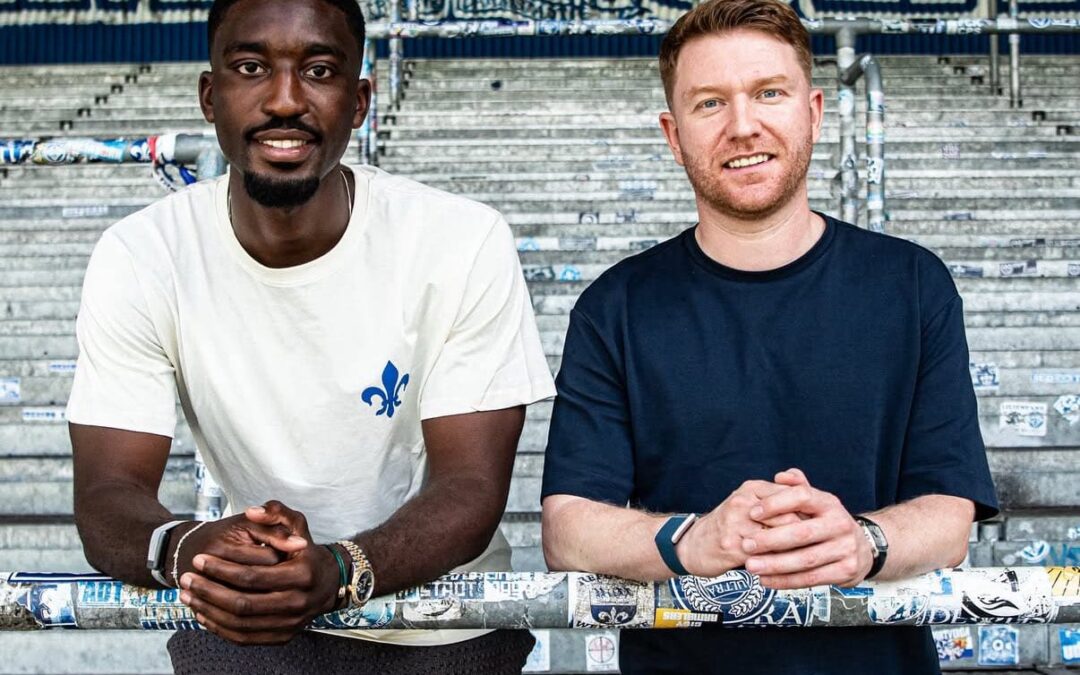
SV Darmstadt 98 have pulled off a notable coup in the transfer market by securing the return of central defender Patric Pfeiffer, who re-joins the club on a contract that runs until 2029.
The move, which reportedly cost €700,000 all-in, comes after fierce competition from Kaiserslautern and Hannover 96, with Darmstadt ultimately winning the race thanks to the decisive efforts of sporting director Paul Fernie.
Pfeiffer’s return marks a strategic reinforcement for the Lilies, who see the 24-year-old as a key pillar for their future ambitions. Known for his commanding presence and aerial ability, Pfeiffer is expected to slot straight into the heart of the defence and bring stability to the backline.
This deal, which had been in the works for weeks, is now officially sealed — a smart, forward-thinking move from a club determined to climb the ranks again.
by Emmanuel Atanga | Jun 27, 2025 | AFCON, Africa, Ghana, Nigeria, Soccer
As the countdown to the 2024 Women’s Africa Cup of Nations (WAFCON) continues, all eyes will be on the much-anticipated showdown between two of Africa’s football heavyweights — Ghana and Nigeria.
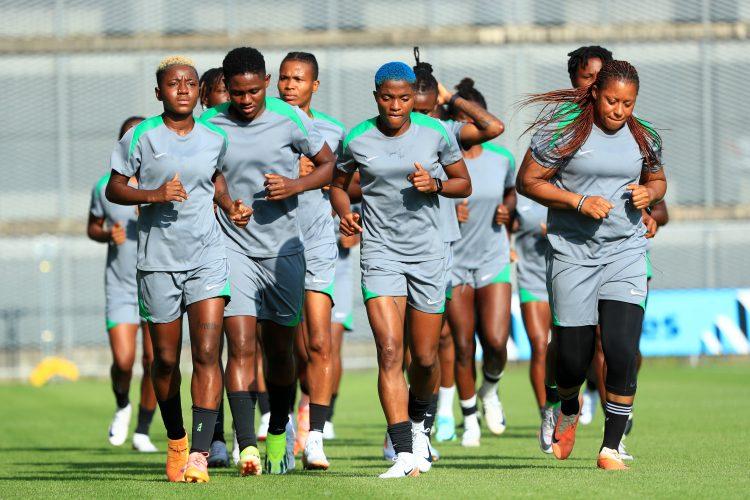
Black Queens head coach, Kim Lars Björkegren, has openly acknowledged that their final pre-WAFCON clash against the Super Falcons on Sunday, June 29, will be the ultimate test for his side. Speaking after Ghana’s 4-2 victory over Benin, the Swedish tactician did not mince words: “Nigeria is one step up.”
Björkegren, who took the reins of Ghana’s women’s national team in early 2024, believes the fixture is crucial to measuring how far his side has progressed. “Nigeria is one of the best teams in Africa with good players in almost every position. The game against them is going to be very, very tough,” he admitted. “But that’s also what we need now.”
Ghana’s road to Morocco has seen the team notch wins over Malawi and Benin, giving the technical team a chance to assess squad depth and tactical versatility. Yet, Björkegren was quick to note that neither of those opponents could truly prepare the Queens for what lies ahead. “With full respect to Malawi and Benin, we need this kind of game now. It’s about developing our mentality and testing our resilience.”
Despite struggling at times against Benin, the Black Queens eventually asserted dominance — a performance the coach described as “a great second half.” He believes the Nigeria clash will offer a clearer picture of Ghana’s readiness to finally chase down the title that has eluded them for decades.
Ghana, runners-up in 1998 and 2002, remain one of the few top-tier sides yet to win the WAFCON. Standing in their path is the indomitable Nigeria — nine-time champions and perennial favourites. Sunday’s encounter won’t just be a dress rehearsal; it’s a symbolic battle between ambition and experience, with the Super Falcons representing the gold standard in African women’s football.
As the Black Queens aim to rewrite their history in Morocco, Sunday’s clash in Accra could be the spark that ignites a title-winning campaign — or a sobering reminder of the climb that still lies ahead.
by Emmanuel Atanga | Jun 27, 2025 | AFCON, Africa, Europe, International, Nigeria, Soccer, USA, World Cup
A Look Back: When Nigeria Stood Tall Among Global Club Giants
As Mamelodi Sundowns bowed out of the newly expanded FIFA Club World Cup with a goalless draw against Brazilian champions Fluminense, conversations reignited across Africa—not about who played, but who didn’t. The absence of any Nigerian club from the prestigious tournament was impossible to ignore.
While North and Southern African powerhouses like Al Ahly, Wydad Casablanca, and Esperance carried the continent’s hopes in the United States, Nigeria’s flag was nowhere in sight.
And it wasn’t always like this.
The moment resonated deeply across social media, particularly after Super Eagles icon Ahmed Musa sounded the alarm, urging urgent reforms in Nigerian football. His words reopened a cherished chapter in Nigeria’s football history—when Enyimba International FC stood shoulder to shoulder with the world’s best.
The Enyimba Era: When Nigeria Ruled Africa
In the early 2000s, Nigerian club football enjoyed a golden age—and Enyimba International Football Club was the crown jewel. Nicknamed The People’s Elephant, the Aba-based club was more than a local success story; they were a continental powerhouse.
In 2003 and 2004, Enyimba etched their name in history by winning back-to-back CAF Champions League titles, a feat no Nigerian club had ever achieved. With Kadiri Ikhana and Okey Emordi at the helm, they blended tactical excellence with fierce determination, defeating giants from North Africa and beyond.
They followed these feats with successive CAF Super Cup victories, solidifying their status as Africa’s undisputed kings. Though Nigeria had no representative at the early editions of the FIFA Club World Championship—largely due to the tournament’s brief hiatus and restrictive format—Enyimba were consistently ranked among the world’s top 30 clubs during their prime.
In a different timeline, they would have graced the world stage.
The Decline and the Dream of a Return
Fast forward to recent years, and while Enyimba remain Nigeria’s most decorated club, they now symbolize a broader problem in Nigerian football. Participation in the inaugural African Football League was a glimmer of hope, but their early exit to Wydad Casablanca underlined the growing gap between Nigeria and other African heavyweights.
Funding challenges, crumbling infrastructure, and weak governance continue to erode the foundation once laid by clubs like Enyimba.
A New Club World Cup—A New Chance?
The evolution of the FIFA Club World Cup—now expanded to 32 teams and held every four years—offers a potential lifeline. More African teams will get a shot at global recognition, prize money, and competitive growth.
Yet, Nigeria remains a spectator. Despite being a goldmine of football talent, no Nigerian club is anywhere near qualification.
Ahmed Musa’s Rallying Cry
In the midst of the global tournament buzz, Ahmed Musa’s voice cut through the noise:
> “It’s a sober reflection if we compare the African Clubs at the Club World Cup to our domestic league, the Nigeria Premier Football League.
Can we compete at this level? What are we not getting right?
We need to review the organisation of the League, the clubs’ structure, and funding. We need to set out new policies and drive the reforms.”
His words echo what many Nigerians already know: there was a time when Nigerian clubs didn’t just dream of global relevance—they lived it. Enyimba proved it.
Hope on the Horizon
The memory of Enyimba’s dominance is not just nostalgia; it’s a benchmark. With the right leadership, investment, and policy overhaul, Nigerian clubs could return to where they belong—among the elite.
The question is no longer whether it’s possible. It’s whether the will exists to make it happen again.

by Emmanuel Atanga | Jun 27, 2025 | Africa, Europe, International, Nigeria, Soccer
Newly-promoted Ligue 1 outfit Paris FC are set to make a major statement in the summer transfer window, with the imminent signing of Nigerian international Moses Simon from FC Nantes.
The 29-year-old winger, who boasts 81 caps and 10 goals for the Super Eagles, is on the verge of completing a €7 million switch to the capital-based club. According to renowned transfer insider Fabrizio Romano, Simon has already passed his medical, with official confirmation from both clubs expected within hours.
Simon leaves Nantes after an impressive five-year spell, racking up 201 appearances, 37 goals, and 42 assists. He’s coming off his best-ever Ligue 1 campaign, tallying eight goals and 10 assists in 32 league appearances during the 2024/25 season.
Paris FC, preparing for their debut campaign in the French top flight, see Simon’s arrival as a major coup. The experienced winger will reportedly sign a three-year contract that runs until 2028, doubling his wages from €38,000 to €75,000 per week — the most lucrative deal of his career.
As one of the Super Eagles’ senior figures, Simon brings leadership, top-flight experience, and attacking flair to Paris FC’s ambitious project in Ligue 1.
by Emmanuel Atanga | Jun 27, 2025 | AFCON, Africa, Ghana, Nigeria, Soccer
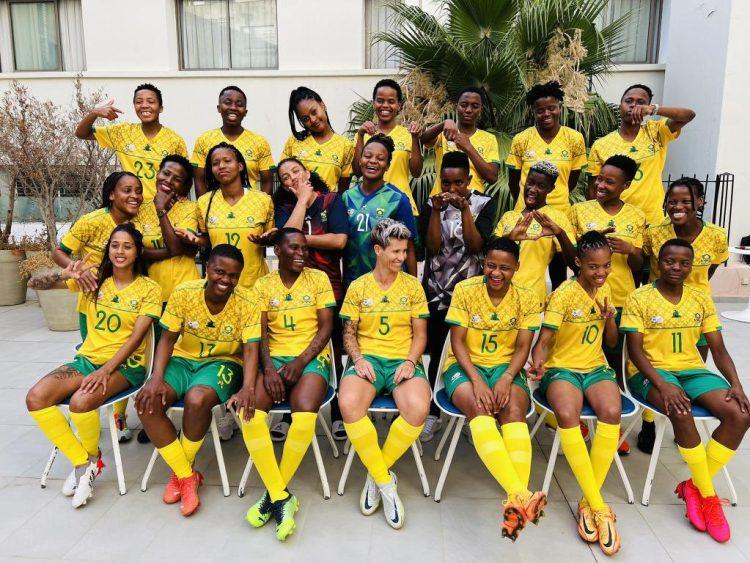
Nigeria’s Super Falcons are bracing themselves for a fierce challenge at the upcoming 2024 Women’s Africa Cup of Nations (WAFCON), as defending champions South Africa reveal a bold and youthful 23-player squad for the tournament in Morocco.
Banyana Banyana coach Dr. Desiree Ellis has made sweeping changes to her squad, signalling a generational shift with a refreshed roster that departs significantly from the team that won South Africa’s maiden WAFCON title in 2022 — a triumph that famously included a victory over Nigeria.
The major headline is the absence of star striker Thembi Kgatlana, who misses out due to injury. Also missing from the final selection are experienced names like goalkeeper Casey Gordon and forward Nthabiseng Majiya, both relegated to standby roles. In total, nine players from the title-winning squad have been dropped, underscoring Ellis’ commitment to evolution and depth-building.
South Africa are drawn in Group C and will begin their campaign against Ghana on 7 July, followed by matches against Tanzania (11 July) and Mali (14 July). Their ultimate goal remains a return to the final in Rabat on 26 July.
Meanwhile, the Super Falcons — nine-time champions and continental heavyweights — will view South Africa’s transformation with both curiosity and caution. Their recent 0-0 draw against Portugal in Lisbon suggests a team fine-tuning for continental glory, aiming for a record-extending 10th WAFCON title.
However, Banyana Banyana’s recent form cannot be overlooked. They’re riding a six-match winning streak, including a 2-0 win over Zambia — a statement response following their COSAFA Cup final defeat in November 2024.
Having both reached the knockout stages of the 2023 FIFA Women’s World Cup, Nigeria and South Africa remain on a collision course. If they meet in Morocco, it promises to be another epic chapter in their fierce rivalry.