by Emmanuel Atanga | Jan 20, 2026 | AFCON, Africa, International, Soccer
Senegal’s victory at the 2025 Africa Cup of Nations will be remembered not only for the silverware lifted in Rabat, but also for the chaos that engulfed a final many believed would crown one of the tournament’s most smoothly organised editions.
The decisive clash against hosts Morocco descended into disorder late in the game. A disallowed Senegal goal was followed by a foul on Brahim Diaz that resulted in a stoppage-time penalty for Morocco, triggering anger both on the pitch and in the stands. Supporters clashed with stewards, tensions flared among players, and on the instruction of head coach Pape Thiaw, Senegal briefly left the field in protest.
Play was halted for nearly 15 minutes before calm was restored and the final resumed. The drama was far from over. Diaz squandered the golden opportunity, missing his Panenka penalty, before Villarreal midfielder Pape Gueye struck decisively in extra time to tilt the contest back in Senegal’s favour. The Teranga Lions then showed composure and resilience to see out a tense finish and secure their second AFCON title.
In the aftermath, criticism was directed at the Moroccan star for his penalty choice, while Senegal captain Sadio Mané and his teammates were widely hailed for their resolve and leadership under extreme pressure. Although CAF and FIFA have since opened investigations into the incidents that marred the final, the result itself stands unchanged: Senegal are champions of Africa once again.
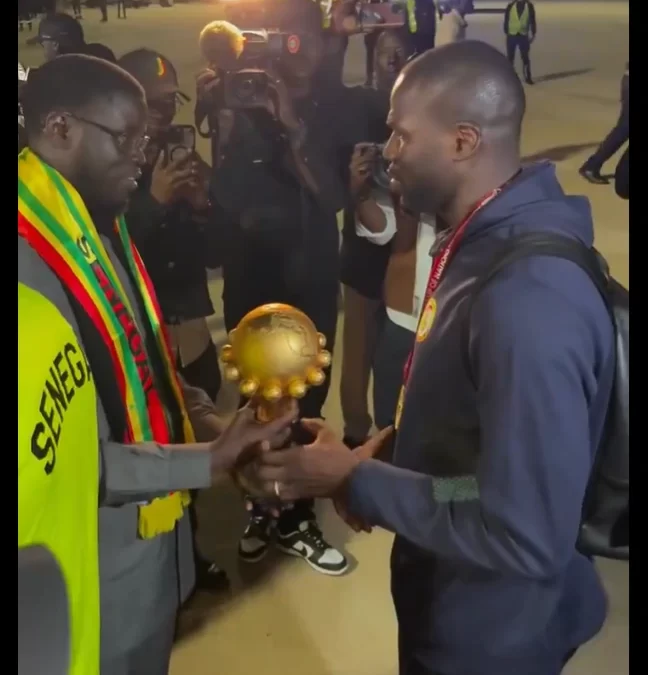
Back in Dakar, controversy quickly gave way to celebration. The AFCON winners returned home to a hero’s welcome, greeted on the tarmac by the Head of State and senior government officials as thousands of jubilant fans flooded the airport. Fireworks lit up the night sky, car horns blared through the streets, and chants echoed across the capital.
With a victory parade scheduled for Tuesday morning, Senegal bask in the glory of a hard-earned triumph. While potential sanctions may still be considered, the nation is firmly focused on celebrating a title secured through grit, drama and an unforgettable final that shook African football.
by Emmanuel Atanga | Jan 20, 2026 | AFCON, Africa, Soccer
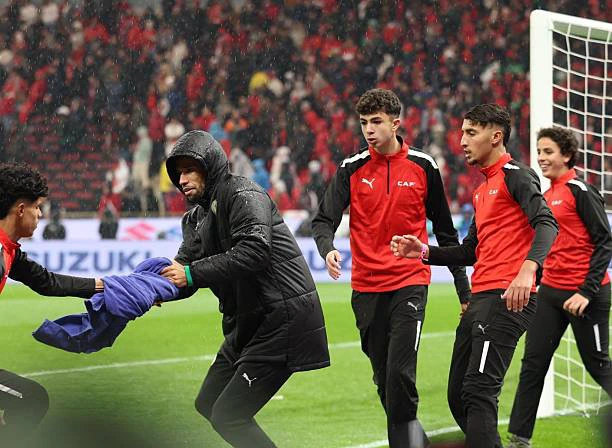
What began as a seemingly harmless sideline nuisance spiralled into one of the strangest and most talked-about subplots of the Africa Cup of Nations (AFCON) 2025 final — the infamous “towel incidents” that left goalkeepers angry, ball boys involved in scuffles, and referees struggling to maintain control.
From towels being snatched, tossed into the crowd and dragged across the turf, to post-tournament mockery from Nigeria’s Stanley Nwabali, the final between Senegal and Morocco exposed a pattern of unsporting behaviour that had quietly simmered throughout the tournament.
How It Started: Why Goalkeepers Guard Their Towels
In modern football, goalkeepers routinely keep spare towels behind their goalposts to wipe moisture from their gloves — a crucial routine, especially in wet conditions. On Sunday night in Rabat, under a light drizzle, Senegal goalkeeper Édouard Mendy relied heavily on that ritual. What followed, however, turned a simple towel into an unlikely flashpoint.
Hakimi, Mendy and the First Flashpoint
The first major incident occurred during a stoppage in play when Neil El Aynaoui was being treated for a head injury following a corner kick.
As the game paused, a Moroccan player — widely believed to be Achraf Hakimi — picked up Mendy’s towel and hurled it over the pitchside advertising boards. The act did not go unnoticed. Senegal captain Sadio Mané quickly retrieved the towel, sparking a brief but heated exchange between players from both sides.
Moments after play resumed, tensions escalated further when a stadium steward deliberately removed the same towel from behind Mendy’s goal, forcing the goalkeeper to search for a replacement.
What Really Happened to Mendy’s Towels
As the match wore on, broadcast footage showed Moroccan ball boys — and even an official — repeatedly interfering with towels meant for Mendy. At one point, Senegal’s second-choice goalkeeper, Yehvann Diouf, took it upon himself to protect his teammate’s equipment.
It turned into an extraordinary night for Senegal’s goalkeeping unit:
Édouard Mendy saved Brahim Díaz’s stoppage-time penalty
Yehvann Diouf physically shielded towels from ball boys
In one chaotic moment, Diouf was dragged across the turf as he tried to return a towel to Mendy
Diouf was also forced into a confrontation with PSV Eindhoven winger Ismael Saibari, who stood between him and Mendy as the Nice goalkeeper attempted to hand the towel to his teammate, now playing for Al-Ahli.
“There She Is”: Diouf’s Viral Instagram Post
After Senegal’s dramatic 1–0 extra-time victory, Yehvann Diouf captured the absurdity of the night with a pointed social media post.
He shared an image of:
His AFCON winners’ medal
A towel
The caption read simply:
“La voilà.” (“There she is.”)
The post was widely interpreted as sarcastic commentary on how much effort Senegal had to expend just to keep a towel behind their goal.
At another point in the final, El Hadji Malick Diouf sprinted toward the sideline to beat ball boys to a towel thrown in their direction by Achraf Hakimi, preventing it from disappearing into the stands.
Déjà Vu: Nwabali’s Earlier AFCON Experience
The scenes in Rabat felt eerily familiar. Earlier in the tournament, Nigeria’s Stanley Nwabali endured similar treatment during the AFCON semi-final against Morocco.
On several occasions, the Super Eagles goalkeeper was forced to:
Return to the bench for replacement towels
Chase sideline towel snatchers
React angrily to repeated interference
One viral clip showed Nwabali raising his middle finger — a moment that puzzled viewers at the time but now appears rooted in repeated provocation.
Nwabali Mocks Morocco After Final Defeat
After Morocco’s loss to Senegal, Nwabali wasted no time revisiting the controversy. Taking to social media, he mocked Moroccan players and officials over the towel incidents.
He wrote in pidgin English:
“Make una use all my towel una carry wipe una tears.”
The post quickly went viral across Nigerian and African football circles.
A Night of Chaos Beyond the Towels
The towel saga unfolded amid an already explosive final. Earlier in stoppage time, Ismaïla Sarr thought he had scored the winner after converting a rebound from Abdoulaye Seck’s header off the post, only for the goal to be disallowed for a foul on Achraf Hakimi.
Minutes later, El Hadji Malick Diouf fouled Brahim Díaz in the box, leading to a controversial penalty award. Senegal briefly walked off the pitch in protest before returning — after which Mendy saved Díaz’s attempted Panenka.
In extra time, Villarreal midfielder Pape Gueye struck the decisive goal, sealing a 1–0 victory for Senegal.
“They Took the Towels, Senegal Took the Trophy”
Despite the chaos, Senegal remained composed and emerged champions once again, securing their second AFCON title in three tournaments and their second continental crown after their 2021 triumph against Egypt.
Earlier in the day, Nigeria claimed the bronze medal after defeating Egypt on penalties, with Stanley Nwabali saving spot-kicks from Mohamed Salah and Omar Marmoush — a fitting subplot in a tournament where goalkeepers, and their towels, stole unexpected headlines.
by Emmanuel Atanga | Jan 20, 2026 | AFCON, Africa, Soccer
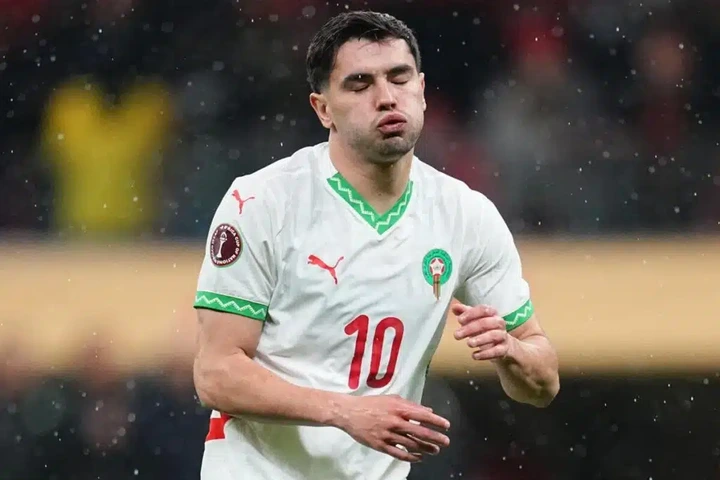
Former Morocco head coach Hervé Renard has launched a scathing critique of Brahim Diaz following the winger’s failed Panenka penalty in the closing moments of Sunday’s Africa Cup of Nations final against Senegal.
Diaz, who plays for Real Madrid, had the opportunity to secure Morocco’s first AFCON title in 50 years when he stepped up to take a stoppage-time penalty in Rabat. However, in a night filled with drama and controversy, the winger attempted an audacious Panenka that was easily saved by Senegal goalkeeper Edouard Mendy.
The penalty was awarded after Diaz was pulled down in the box by El Hadji Malick Diouf, just minutes after Senegal had a goal disallowed. The decision sparked outrage among the Senegalese players, who temporarily walked off the pitch on the instruction of head coach Pape Thiaw.
After a 17-minute delay, play resumed, leaving Diaz with what proved to be the final kick of normal time.
Senegal went on to win the final 1–0 in extra time, with Pape Gueye scoring the decisive goal.
Reacting to the incident, Renard — a two-time AFCON-winning coach with Zambia in 2012 and Cote d’Ivoire in 2015 — said Diaz’s choice of penalty showed a serious lack of judgment.
“You can miss a penalty, but in that situation I am categorical — I have no compassion,” Renard told Le Parisien. “It was a lack of respect for an entire country and a whole people who have been waiting for success for 50 years.”
Now head coach of Saudi Arabia, Renard recalled a similar incident during the Arab Cup, when one of his players missed a Panenka against Morocco. He said he insisted the player accompany him to a press conference to apologise.
Diaz has since issued a public apology, expressing deep regret over the miss.
“My soul hurts. I dreamed of this title, I failed and I take full responsibility,” Diaz wrote on social media. “I apologise from the bottom of my heart. It will be hard to recover because this wound doesn’t heal easily — but I will try.”
The Morocco winger is expected to return to Real Madrid this week as he turns his focus back to club football.
by Emmanuel Atanga | Jan 20, 2026 | AFCON, Africa, Soccer
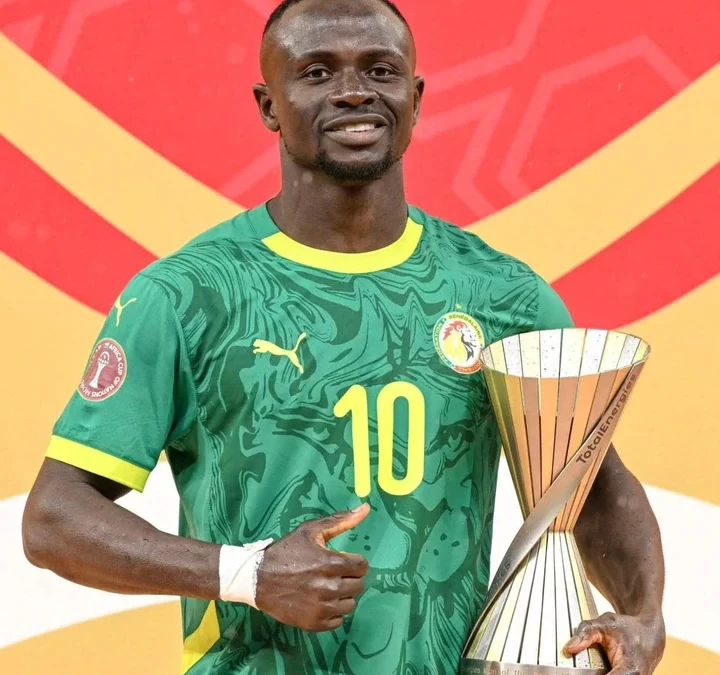
Ghana’s Ambassador of Sports, Emmanuel Olla Williams, has declared that no player should be considered ahead of Sadio Mane for the Confederation of African Football (CAF) African Best Footballer of the Year award, following the Senegal captain’s exemplary leadership during Sunday’s dramatic Africa Cup of Nations (AFCON) final.
Senegal edged hosts Morocco 1–0 after extra time at the Prince Moulay Abdellah Stadium in Rabat, but the final was overshadowed by controversy when Senegalese players walked off the pitch in protest after Morocco were awarded a late penalty. Mane played a decisive role in preventing a potential abandonment, convincing his teammates to return and complete the match.
Williams, popularly known as The GAS Man, said Mane’s actions transcended football, describing them as a powerful lesson in leadership, responsibility and respect for the game. He praised the Al Nassr forward for averting what could have been a damaging episode for African football on the global stage.
The controversy erupted deep into stoppage time when Congolese referee Jean Jacques Ndala awarded Morocco a penalty following a VAR review after Brahim Diaz went down under a challenge from El Hadji Malick Diouf. Senegal head coach Pape Thiaw ordered his players off the pitch, and most initially complied.
Mane, however, chose to remain on the field. After speaking with match officials, Moroccan players and senior figures around the pitch, he went to the dressing room and rallied his teammates. Around 14 minutes later, Mane led Senegal back onto the pitch, allowing the final to continue.
Explaining his decision afterward, Mane said stopping the match was not fair to the game or to Africa. He acknowledged that referees can make mistakes and stressed that respect for football was more important than any single decision, adding that he would rather lose than see African football disgraced.
When play resumed, Diaz attempted a Panenka penalty, but Edouard Mendy read it perfectly and made the save. The match went into extra time, where Pape Gueye scored a stunning 94th-minute winner to secure Senegal’s second AFCON title.
Mane was later named Player of the Tournament after registering two goals and three assists. He also created the most chances from open play (18) and reached a historic 20 AFCON goal involvements, made up of 11 goals and nine assists since detailed records began in 2010. Morocco’s Brahim Diaz finished as top scorer with five goals, while Yassine Bounou was named Best Goalkeeper.
The final was further marred by crowd trouble and earlier officiating decisions, including a disallowed Ismaila Sarr goal that angered Senegal supporters. CAF condemned the inappropriate conduct witnessed during the match and confirmed that the incident would be referred to the appropriate disciplinary bodies.
Coach Pape Thiaw later admitted he was wrong to instruct his players to leave the pitch, describing the decision as one made in the heat of the moment. Reports indicate that former Senegal star El Hadji Diouf and veteran coach Claude Le Roy also spoke with Mane on the pitch, encouraging him to ensure the match was completed.
The triumph marks Senegal’s second AFCON title, following their maiden success in 2022, where Mane also claimed Player of the Tournament honours. Morocco, meanwhile, were hoping to end a 50-year wait for a second continental crown.
Mane, Senegal’s all-time leading scorer with 53 goals from 126 caps, revealed that the tournament was intended to be his final AFCON appearance, though coach Thiaw has expressed hope that the captain will reconsider.
The next AFCON will be hosted jointly by Kenya, Tanzania and Uganda in 2027, the first time East Africa will stage the tournament, with CAF officially handing over the hosting flag during the closing ceremony in Rabat.
by Emmanuel Atanga | Jan 20, 2026 | AFCON, Africa, International, Nigeria, Soccer
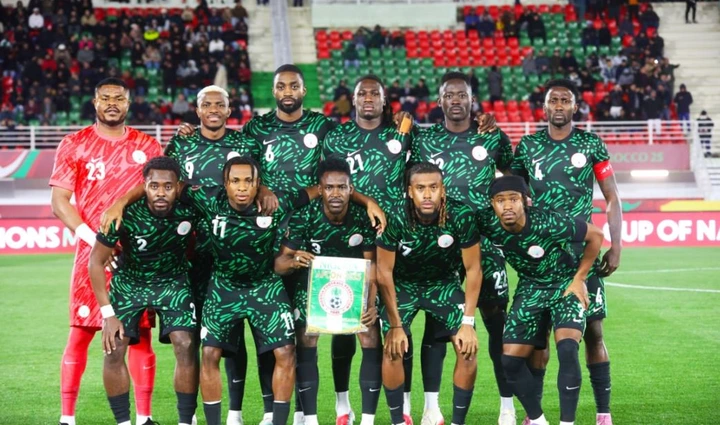
Nigeria’s Super Eagles have recorded a significant leap in the latest FIFA World Rankings, climbing 12 places to 26th following their impressive campaign at the 2025 Africa Cup of Nations in Morocco.
The rankings, released on Monday, January 19, 2026, reflect Nigeria’s strong showing at the tournament, where the Super Eagles finished third to claim the bronze medal. Their rise from 38th to 26th globally underscores the impact of a largely dominant AFCON run.
Nigeria won six of their seven matches at the competition, with their only setback coming in a tightly contested semi-final defeat to host nation Morocco, decided on penalties.
As a result, the Super Eagles are now ranked third in Africa, behind AFCON champions Senegal, who sit 12th in the world, and runners-up Morocco, who have climbed to an all-time high of eighth globally.
Algeria and Egypt, both knocked out by Nigeria during the tournament, complete the continent’s top five, ranking fourth and fifth respectively in Africa.
At the top of the global standings, Spain retain first place, followed by Argentina, France, England and Brazil. Portugal, the Netherlands, Belgium, Germany and Croatia round out the world’s top 10 nations.