by Emmanuel Atanga | Jan 20, 2026 | AFCON, Africa, Ghana, Soccer
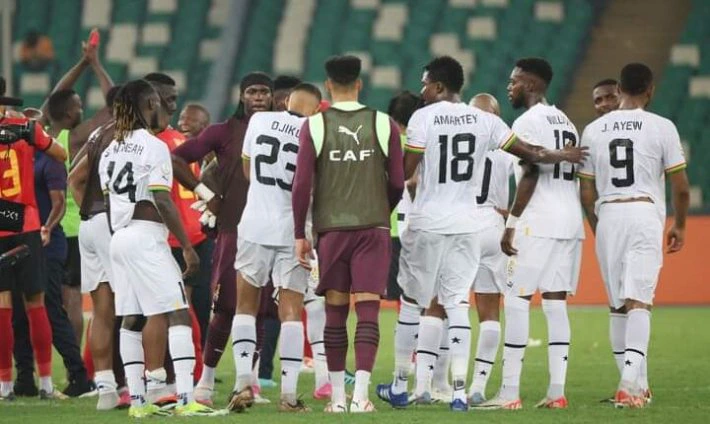
Watching Senegal celebrate a second Africa Cup of Nations title in five years has inevitably stirred mixed emotions among Ghanaians — admiration, and a lingering sense of envy.
Admiration, because Ghanaians understand better than most just how difficult it is to win the AFCON. The Black Stars, Ghana’s senior national team, have been chasing a fifth continental crown since their last triumph in 1982. Since the tournament expanded to 16 teams in 1992, that elusive title has remained out of reach, despite periods of sustained competitiveness.
Between 2008 and 2017, Ghana reached the AFCON semi-finals six times — in 2008, 2010, 2012, 2013, 2015 and 2017 — a remarkable level of consistency. Yet only two of those campaigns ended in finals, and both ended in heartbreak.
The 2010 final in Angola saw the Black Stars come agonisingly close before being undone by Mohamed Nagy “Gedo’s” late winner for Egypt. It was a painful lesson for a young Ghanaian core that included Agyemang Badu, Andre Ayew, Samuel Inkoom, Opoku Agyemang and Jonathan Mensah, as the team prepared for a future without Michael Essien and Stephen Appiah.
Five years later, after three more semi-final appearances and a World Cup outing, Ghana returned to the AFCON final — this time in Bata, Equatorial Guinea — seemingly better prepared and more experienced. What followed against Cote d’Ivoire, however, remains one of the most painful nights in Ghana’s football history.
The Black Stars hit the woodwork twice in the first half through the late Christian Atsu and Andre Ayew. In the penalty shootout, Ghana surged into a commanding 2–0 lead after Wilfried Bony and Junior Gadjí missed Cote d’Ivoire’s opening kicks.
Then came the inexplicable. Instead of reshuffling the order to deploy their most reliable penalty takers, the technical team, led by Avram Grant, allowed Afriyie Acquah and Frank Acheampong to step up next. Both missed. The advantage vanished — and so did the trophy.
Statistically, teams that take a two-goal lead in penalty shootouts go on to win more than 98% of the time. Ghana fell into the rare, painful minority. Few understand the cruelty of AFCON better than the Black Stars.
The envy stems from a harsher truth:
Ghana’s golden generation remains the only major African powerhouse of the last two decades to reach multiple finals without lifting the trophy.
Egypt’s golden era, led by Mohamed Aboutrika, Wael Gomaa, Ahmed Hassan and Mohamed Barakat, delivered three consecutive titles between 2006 and 2010 — twice at Ghana’s expense. Nigeria triumphed in 2013 with stars such as John Mikel Obi, Victor Moses and Ahmed Musa.
Cote d’Ivoire have won it twice, in 2015 against Ghana and again in 2024 with a younger squad. Algeria, powered by Riyad Mahrez and Yacine Brahimi, claimed the title in Egypt in 2019.
Ghana, despite repeated near-misses, stand alone without a title in that period.
Recent performances offer little evidence of an immediate turnaround. The Black Stars have won just one of their last 10 AFCON matches and failed to record a single win in their last two tournament appearances, both ending in group-stage exits.
While Ghana have managed to qualify for two World Cups in that period, their absence from AFCON 2025 underlines how far they are from genuine title contention. For now, talk of continental glory remains unrealistic.
Consistency, not ambition, must be the starting point. And perhaps, the World Cup offers the best stage to begin rebuilding belief.

by Emmanuel Atanga | Jan 20, 2026 | Africa, Ghana, International, Nigeria, Soccer
Ghana have remained 72nd in the latest FIFA world rankings released on Monday, January 19, marking the third consecutive month the Black Stars have held the same position.
The senior national team played only one match during the period under review, with the Black Galaxies representing Ghana in a pre-AFCON friendly against South Africa’s Bafana Bafana. As a result of Ghana’s absence from the 2025 Africa Cup of Nations, their points total remains unchanged from the November rankings.
On the African continent, the Black Stars also maintain their position as the 14th-ranked team.
In contrast, all four semi-finalists from the recently concluded AFCON 2025 recorded significant improvements in the standings. Champions Senegal climbed to 12th in the world — their highest position since the FIFA rankings were introduced — and now sit second in Africa.
Runners-up Morocco enjoyed a historic rise, breaking into the global Top 10 for the first time. The Atlas Lions are now ranked 8th in the world, making them Africa’s highest-ranked nation.
Nigeria also made a notable leap, moving up more than ten places to 26th globally and third in Africa. They are followed by Algeria, ranked 28th, and Egypt, ranked 31st, to complete the continent’s Top Five.
At the summit of the global rankings, Spain continue to hold the number one spot, with world champions Argentina, France, England and Brazil rounding off the Top Five.
by Emmanuel Atanga | Jan 20, 2026 | Africa, Europe, Ghana, International, Soccer, USA, World Cup
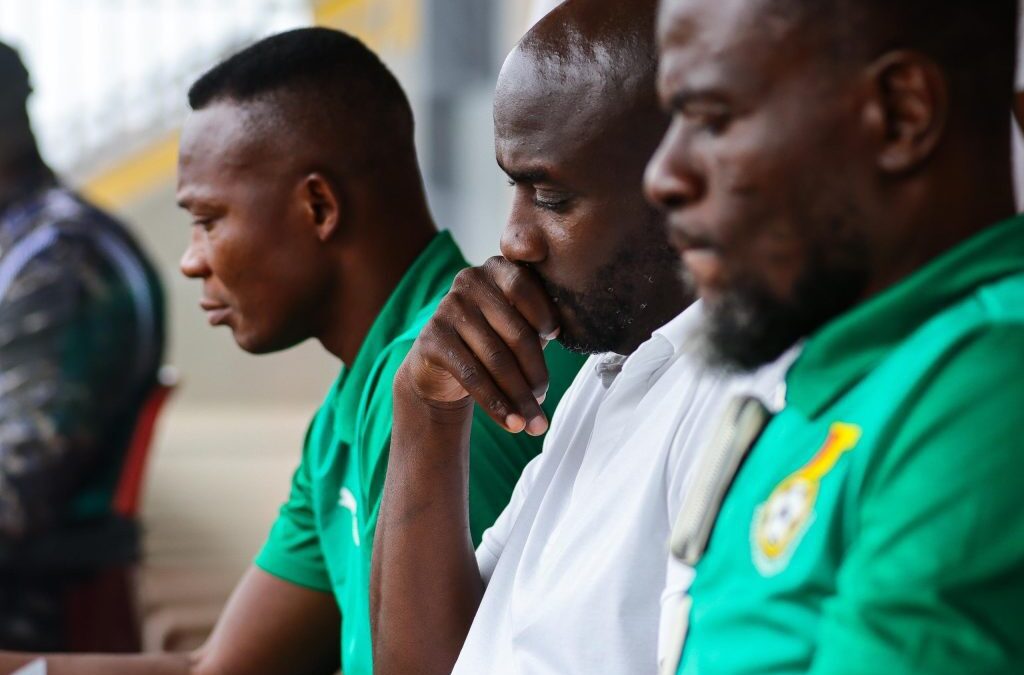
The Communications Director of the Ghana Football Association (GFA), Henry Asante Twum, has confirmed that Black Stars head coach Otto Addo has formally requested an expansion of his technical team ahead of the 2026 FIFA World Cup.
Ghana, set to make a fifth appearance at the global showpiece, have been drawn into a challenging group alongside Panama, England and Croatia. With preparations intensifying, Addo believes strengthening the backroom staff is crucial to improving the team’s chances at the tournament.
Speaking in an interview with Sportsblog247.com, Asante Twum revealed that the Black Stars coach has already communicated his request to the Football Association.
“I am aware that Otto Addo has requested to beef up the Black Stars technical team,” he said. “This is the biggest football tournament, and he believes we must go there with the best.”
The GFA has already bolstered the technical setup with the additions of Winfried Schäfer, Desmond Ofei and Gregory De Grauwe, but further reinforcements could still be on the way.
Ghana will begin their World Cup group campaign against Panama on June 17 in Toronto, followed by a clash with England in Boston, before rounding off the group stage against Croatia on June 27 in Philadelphia.
After disappointing early exits at the 2014 World Cup in Brazil and the 2022 edition in Qatar, the Black Stars are determined to make a stronger impact at the expanded 2026 tournament.
As part of their build-up, Ghana will also test their readiness in an international friendly against Germany on March 30 in Stuttgart.
by Emmanuel Atanga | Jan 20, 2026 | AFCON, Africa, International, Soccer
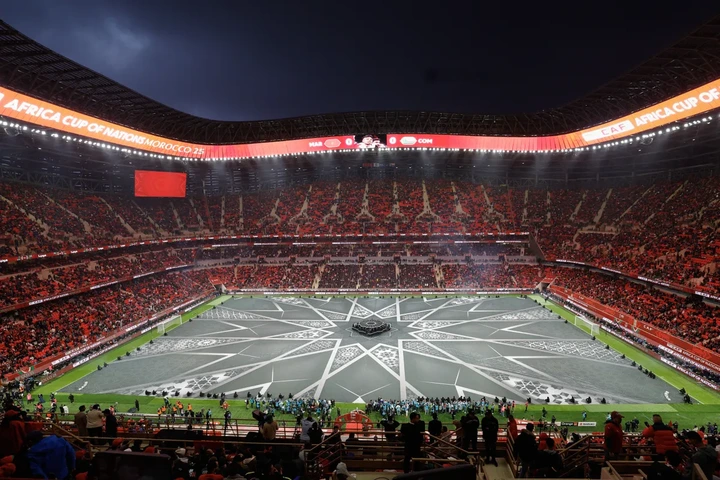
Morocco’s dramatic loss to Senegal in the 2025 Africa Cup of Nations final has sparked a major controversy, with the Royal Moroccan Football Federation (RMFF) confirming plans to pursue legal action following a chaotic end to Sunday night’s showpiece.
The hosts were held goalless by Senegal at the end of normal time, but the match was thrown into disarray in stoppage time when referee Jean Jacques awarded Morocco a penalty after El Hadji Malick Diouf brought down Brahim Diaz. The decision came shortly after a Senegal goal had been disallowed, heightening tensions inside the stadium.
Senegal head coach Pep Thiaw reacted by ordering his players off the pitch in protest, leading to a 17-minute delay. When play eventually resumed, Diaz failed to capitalise, seeing his attempted Panenka penalty comfortably saved by Edouard Mendy. The referee then blew for full time, sending the final into extra time.
Senegal went on to seal the title just four minutes into the additional period, with Villarreal midfielder Pape Gueye scoring the decisive goal to hand the Teranga Lions victory.
The incident drew swift criticism from FIFA president Gianni Infantino, who stressed the importance of respecting match officials and adhering strictly to the Laws of the Game, warning that any deviation threatens the integrity of football.
Taking cue from those remarks, Moroccan authorities announced on Monday that they intend to take the matter to court. In a statement posted on X, the RMFF said it would pursue legal action with both CAF and FIFA over Senegal’s temporary withdrawal from the pitch, arguing that the incident disrupted the normal flow of the match and affected player performance. The federation maintained that the penalty decision itself was correct and supported by experts.
CAF has also weighed in, condemning any inappropriate conduct during matches and confirming that it is reviewing all available footage. The continental body said the case will be referred to the appropriate disciplinary bodies, suggesting the fallout from the final is far from over.

by Emmanuel Atanga | Jan 19, 2026 | AFCON, Africa, Soccer
Senegal may have emerged as champions of the 2025 Africa Cup of Nations, but the Teranga Lions will not be keeping the original AFCON trophy—an outcome that has little to do with events on the pitch.
Thomas Partey’s Villarreal teammate, Pape Gueye, was the hero on a dramatic night in Morocco, scoring the decisive goal in extra time to seal Senegal’s second continental title and silence a partisan home crowd.
Senegal’s victory over hosts Morocco delivered emotion, controversy, and high drama in equal measure. Battling injuries, suspensions, and several heated officiating moments, the Teranga Lions showed immense resilience to conquer Africa on Moroccan soil.
How Senegal edged Morocco to lift AFCON 2025
The final was a tense affair, with few clear-cut chances in the opening exchanges. Iliman Ndiaye and Ayoub El Kaabi both missed opportunities before halftime, reflecting the cautious nature of the contest.
Late drama followed. Senegal briefly thought they had won the match from a corner, only for the goal to be ruled out. Moments later, VAR awarded Morocco a penalty at the other end, sparking furious protests from Senegalese players and head coach Pape Thiaw, who briefly walked off the pitch with his team.
The interruption appeared to unsettle Morocco. Real Madrid star Brahim Diaz stepped up but missed the spot kick, pushing the final into extra time.
Belief quickly surged through the Senegal camp, and in the 94th minute, Pape Gueye struck the decisive goal, a moment that ultimately secured the title.
Why Senegal won’t keep the original AFCON trophy
During the celebrations, CAF president Patrice Motsepe presented Senegal with the iconic AFCON trophy. However, CAF regulations state that the original cup is used strictly for presentation purposes.
According to CAF Online, once the champions’ name is engraved, the trophy is lifted, celebrated with, and then returned to CAF. The winning team later receives an official replica to keep permanently.
This policy was introduced in 2002 after CAF lost two previous trophies: the Abdelaziz Abdallah Salem Trophy (1957–1978) and the African Unity Trophy (1980–2000). CAF rules also require the original trophy to be returned at least two months before the next AFCON tournament.
As a result, Senegal join a long list of champions who briefly held the original trophy on the night but departed with a replica as their lasting symbol of glory.
AFCON prize money
Beyond the silverware, Senegal’s triumph came with a major financial reward. The champions earned $10 million, while runners-up Morocco received 60% less for finishing second.