
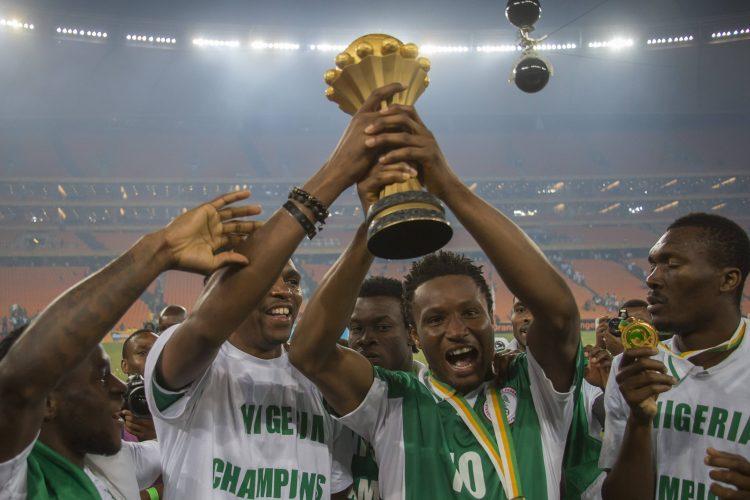
When John Obi Mikel lifted the UEFA Champions League trophy with Chelsea in 2012, he was at the pinnacle of European football. But for the former Super Eagles captain, a moment even more profound was just around the corner — and it would come not on the grand stages of Europe, but deep in the heart of Africa.
That unforgettable night in Johannesburg in February 2013, when Nigeria clinched the Africa Cup of Nations title after a 19-year drought, remains the most emotional chapter of Mikel’s decorated career.
> “We play everything — Premier League, Champions League — but it’s always special when you win something with your national team,” Mikel told That Peter Crouch Podcast.
From Stamford Bridge to National Hero
Having conquered Europe with Chelsea, Mikel returned to national duty in 2013 with pressure like never before. Nigerians, proud of his continental success, began to demand similar glory on the home front. The expectations were heavy — not just from fans, but even from his own family.
> “That pressure wasn’t just from supporters. My parents, my siblings — everyone said, ‘You’ve done it in Europe, now do it for us.’”
With Stephen Keshi at the helm — a former AFCON-winning captain turned coach — Mikel became the heartbeat of a Nigerian side that stumbled through the group stage, but suddenly came alive against the giants of African football.
In the quarterfinals, they faced an Ivorian team boasting Yaya Touré, Didier Drogba, and Salomon Kalou. Against the odds, the Super Eagles stunned them. Then came a dominant semi-final showing against Mali, followed by the final showdown with Burkina Faso.
Sunday Mba’s strike settled the final, but Mikel’s influence — calm, commanding, and creative — earned him a place in the CAF Team of the Tournament, alongside fellow Nigerian stars Vincent Enyeama, Victor Moses, Emmanuel Emenike, and Efe Ambrose.
“I Shed Blood and Tears for This”
What made the 2013 triumph even more special for Mikel wasn’t just the silverware — it was what it meant to the nation.
> “In Africa, football is everything. When we won, the whole country exploded. People didn’t sleep — music, dancing, drinking, total madness. That joy? You don’t get that with a club trophy.”
Mikel didn’t hold back when asked about critics who’ve belittled AFCON in the past — especially after Jamie Carragher made dismissive remarks about players leaving European clubs to represent their countries.
> “I responded to Carragher. You don’t discredit a tournament people die for. Didier Drogba literally stopped a war with football. That’s how much it means.”
More Than a Trophy — A Childhood Dream
Growing up in Nigeria, Mikel idolized players like Jay Jay Okocha and Nwankwo Kanu. Watching them at AFCON lit a fire in him — one he carried until he finally lifted the same trophy as they once had.
> “As a boy, I dreamed of AFCON. I told myself — I want to be there one day. Watching those tournaments made me fall in love with football.”
After the victory, Mikel and his teammates were received at the Aso Rock Presidential Villa. In addition to national honors, they were awarded plots of land, a gesture symbolic of their contribution to national pride.
> “They gave us land — I don’t even know where mine is! But that showed how much they appreciated it.”
Legacy Etched in Gold
Mikel ended his international career in 2019 with 91 caps, six goals, two World Cup appearances, and five AFCON tournaments under his belt. He also helped Nigeria to Olympic bronze in Rio 2016.
But when it comes to personal satisfaction, nothing compares to the night he conquered Africa.
> “I felt a little bit more than when I won the Champions League — because of how much it meant to the people of Nigeria.”



0 Comments