
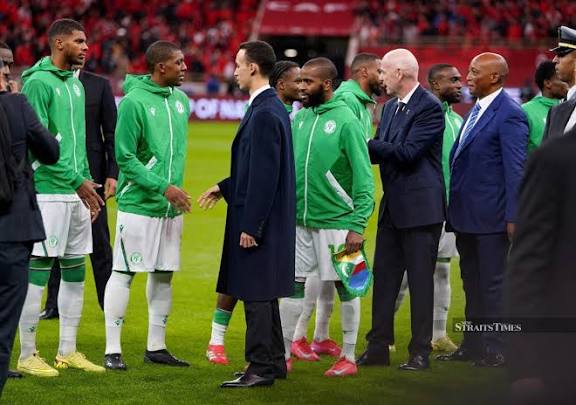
The decision to shift the Africa Cup of Nations from a biennial to a four-year cycle has sparked debate among coaches participating in AFCON 2025, with many questioning whether the move truly serves African football.
CAF President Patrice Motsepe announced on December 20 that, starting in 2028, the tournament would be held every four years to better align with FIFA’s international calendar. While the change was intended to ease scheduling conflicts and accommodate European clubs, reactions from coaches have been mixed—some viewing the decision as a concession to European interests at the expense of Africa’s own footballing identity.
Mali head coach Tom Saintfiet criticised the move, highlighting the historical significance of AFCON’s biennial tradition. “Since the first tournament in 1957, Africa has had its Cup of Nations every two years,” he said. “We must respect Africa. It cannot be Europe—the big clubs, FIFA, UEFA—deciding what we should do.”
Egypt’s Hossam Hassan echoed concerns, questioning who truly benefits from the shift. “It seems designed for African players based in Europe, whose clubs don’t want to release them for their national teams,” he said. “FIFA often talks about respect. That respect must apply to everyone, including African teams, players, and fans.”
Not all coaches expressed outright opposition. Morocco’s Walid Regragui offered a more balanced perspective, acknowledging both positives and negatives. He suggested that a four-year cycle might ultimately benefit African players by allowing European clubs to value them more highly, knowing they will be unavailable less frequently for AFCON. “An AFCON every four years will inevitably become a major event that no one will want to miss,” he said. “My priority is seeing African football grow.”
Motsepe also introduced the concept of an African Nations League, intended to provide more regular competitive matches for national teams, effectively offering a “Cup every year.” However, none of the coaches appeared fully convinced, particularly as there will be no Nations League during World Cup years. FIFA Secretary-General Mattias Grafström accompanied Motsepe during the announcement, citing scheduling conflicts, including the revamped Club World Cup, as a primary reason for the shift.
The debate underscores the ongoing challenge of balancing African football’s growth, player welfare, and global scheduling pressures. With hosting complications having forced Guinea to relinquish the 2025 edition due to inadequate infrastructure, the discussion around the continent’s premier tournament remains as relevant as ever.




0 Comments