by Emmanuel Atanga | Jan 8, 2026 | Africa, Europe, Ghana, International, Soccer, USA, World Cup
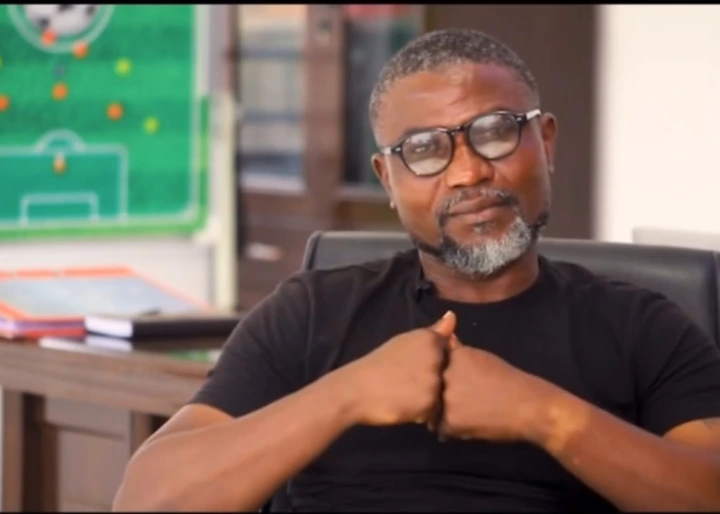
Former Ghana midfielder Laryea Kingston has described the Black Stars’ upcoming clash with England in the 2026 World Cup group stage as an exciting challenge.
Ghana will meet the Three Lions on June 23 at Gillette Stadium in Boston for their second Group L match.
“These are games; I believe the players will be ready for that. Most of the players look up to them, and they play just like the English team, so it will be a tough one and an exciting one as well,” Kingston told SuperSport Blitz.
Kingston also stressed the importance of not underestimating Panama, Ghana’s opening group opponents.
“Everyone is looking up to the game against Panama, but we should not underrate them. Everyone, I believe, is looking forward to these kinds of games, but these teams are such that they work hard,” he added.
Ghana’s Group L campaign begins against Panama on June 17 in Toronto, followed by the England match in Boston on June 23, and concludes against Croatia on June 27 in Philadelphia.
After early exits at the 2014 World Cup in Brazil and the 2022 tournament in Qatar, the Black Stars will be eager to make a stronger impact in the expanded 2026 edition.

by Emmanuel Atanga | Jan 8, 2026 | AFCON, Africa, Nigeria, Soccer
The Algerian squad continues its CAN 2025 preparations in Rabat, taking a measured approach ahead of their quarter-final clash with Nigeria. Having secured their spot in the last eight, the Greens have chosen to remain in Morocco’s capital—where they’ve been based for nearly three weeks—rather than moving directly to Marrakech, the venue for Saturday’s 5 p.m. showdown.
Stationed at the Marriott Hotel and training at the Mohammed VI Academy in Salé, head coach Vladimir Petkovic emphasizes maintaining stability. With players familiar with their surroundings and top-notch facilities at hand, the coaching staff sees no sporting advantage in relocating early, especially since CAF rules prevent teams from inspecting stadiums until the day before their matches.
The Algerian Football Federation is therefore considering a Friday morning departure to Marrakech, just a day ahead of kickoff. The move is not without debate, as CAF would prefer teams to arrive by Thursday to accommodate protocol and media obligations. A final decision is expected soon.
by Emmanuel Atanga | Jan 8, 2026 | AFCON, Africa, International, Soccer
The decision to shift the Africa Cup of Nations from a biennial to a four-year cycle has sparked debate among coaches participating in AFCON 2025, with many questioning whether the move truly serves African football.
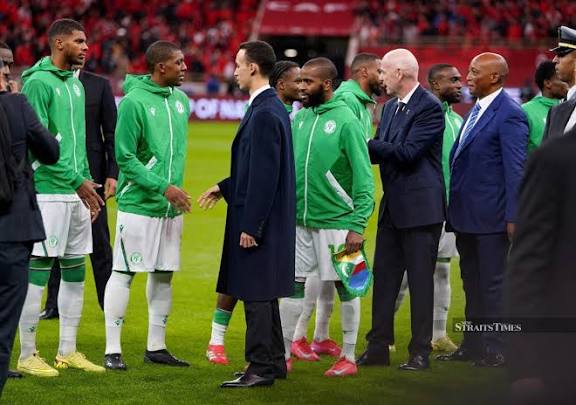
CAF President Patrice Motsepe announced on December 20 that, starting in 2028, the tournament would be held every four years to better align with FIFA’s international calendar. While the change was intended to ease scheduling conflicts and accommodate European clubs, reactions from coaches have been mixed—some viewing the decision as a concession to European interests at the expense of Africa’s own footballing identity.
Mali head coach Tom Saintfiet criticised the move, highlighting the historical significance of AFCON’s biennial tradition. “Since the first tournament in 1957, Africa has had its Cup of Nations every two years,” he said. “We must respect Africa. It cannot be Europe—the big clubs, FIFA, UEFA—deciding what we should do.”
Egypt’s Hossam Hassan echoed concerns, questioning who truly benefits from the shift. “It seems designed for African players based in Europe, whose clubs don’t want to release them for their national teams,” he said. “FIFA often talks about respect. That respect must apply to everyone, including African teams, players, and fans.”
Not all coaches expressed outright opposition. Morocco’s Walid Regragui offered a more balanced perspective, acknowledging both positives and negatives. He suggested that a four-year cycle might ultimately benefit African players by allowing European clubs to value them more highly, knowing they will be unavailable less frequently for AFCON. “An AFCON every four years will inevitably become a major event that no one will want to miss,” he said. “My priority is seeing African football grow.”
Motsepe also introduced the concept of an African Nations League, intended to provide more regular competitive matches for national teams, effectively offering a “Cup every year.” However, none of the coaches appeared fully convinced, particularly as there will be no Nations League during World Cup years. FIFA Secretary-General Mattias Grafström accompanied Motsepe during the announcement, citing scheduling conflicts, including the revamped Club World Cup, as a primary reason for the shift.
The debate underscores the ongoing challenge of balancing African football’s growth, player welfare, and global scheduling pressures. With hosting complications having forced Guinea to relinquish the 2025 edition due to inadequate infrastructure, the discussion around the continent’s premier tournament remains as relevant as ever.
by Emmanuel Atanga | Jan 8, 2026 | AFCON, Africa, Nigeria, Soccer
Nigerian football has never lacked talent. What it has often struggled to protect is temperament. Across decades, the country has produced players of astonishing ability—artists whose brilliance lit up stadiums, only to fade far too quickly. Not because they were not good enough, but because discipline, patience, and judgment failed them at crucial moments.
Football folklore has a name for such figures: enfant terrible—talents so gifted that genius and self-destruction seem to coexist within them. Sadly, Nigeria knows this story all too well.
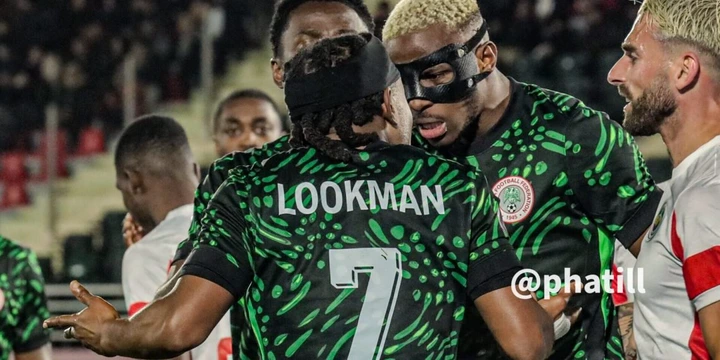
This is not an accusation. It is a warning shaped by history—one that today’s brightest star, Victor Osimhen, cannot afford to ignore.
To understand why restraint matters, one must look back.
In 1979, a 15-year-old boy from Ajegunle signed for Stationery Stores. His name was Tarila Okorowanta, and to those who saw him play, he was pure football magic.
Small in stature but enormous in talent, Tarila could play anywhere across the pitch—winger, playmaker, central midfielder, even a false nine long before the term existed. Coaches trusted him. Fans adored him. Teammates spoke of his effortless brilliance.
He shared the field with Nigerian greats like Austin Fregene, Peter Rufai, and Haruna Ilerika. His résumé sparkled: a Cup Winners’ Cup final appearance in 1981, an FA Cup triumph in 1982, the WAFU Cup in 1984, AFCON silver with Nigeria the same year, and a league title in 1987.
Then came the moment that changed everything.
After scoring four goals in a crushing 7–1 win for Shooting Stars against Mighty Jets, Tarila travelled with the team to Tunisia for a CAF Champions League fixture. On the return journey, he disappeared. He absconded.
He resurfaced in Italy, spent years chasing contracts that never materialized, and later moved to the United States. There, a player once destined for greatness found himself coaching a Grade 7 girls’ team.
The talent never left him. Discipline did.
Another painful chapter belongs to Etim Esin—a footballer so gifted that legendary commentator Ernest Okonkwo dubbed him “The African Maradona.” Esin dazzled for Iwuanyanwu Nationale, Calabar Rovers, Flash Flamingos, and Nigeria’s U-20 side. His skill was unquestionable. His downfall was not.
Time and again, opportunity knocked. Time and again, poor judgment answered.
These stories are not meant to diminish their gifts, but to underline a brutal truth: in Nigerian football history, talent alone has never been enough.
Today, Victor Osimhen stands at the summit—arguably Nigeria’s most valuable footballing asset in generations. His hunger, passion, and intensity are strengths. But history whispers a warning: when emotion runs ahead of control, even the brightest flame can burn out too soon.
Nigeria has seen this movie before. It must not end the same way again.
by Emmanuel Atanga | Jan 8, 2026 | AFCON, Africa, Nigeria, Soccer
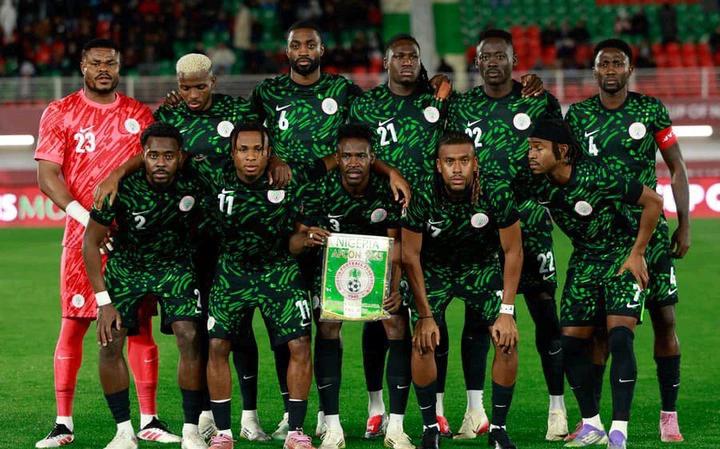
All eyes will be on Saturday as two of Africa’s football heavyweights, Algeria and Nigeria, collide in a blockbuster quarter-final with a coveted place in the AFCON 2025 semifinals on the line.
According to BBC Sport, the meeting brings together two nations rich in history, pedigree, and continental success—setting the stage for one of the tournament’s most eagerly awaited encounters. Algeria arrive brimming with confidence after navigating the earlier rounds with composure, relying on their trademark tactical discipline and technical sharpness to outmaneuver opponents.
The Desert Foxes are expected to dominate possession, slow the tempo, and patiently probe for openings, knowing that even the smallest defensive lapse from Nigeria could be punished with precision.
Standing in their way are the Super Eagles, a side growing stronger with every match.
Nigeria have combined physical power with attacking flair throughout the tournament, blending seasoned campaigners with exciting emerging talents. Their pace out wide and strength through the middle pose a serious threat to Algeria’s back line, ensuring a fierce contest across every area of the pitch.
History adds extra spice to the encounter. Past meetings between the two rivals have often been decided by fine margins, and this latest chapter promises to follow the same script. From midfield duels to defensive battles, individual matchups could ultimately shape the outcome.
While Algeria will seek control through structured build-up and calm possession, Nigeria are likely to rely on intensity, athleticism, and swift counter-attacks to turn the game in their favor. With semifinal qualification at stake, neither side can afford complacency.
For fans, the promise is clear: a tense, tactical, and emotionally charged contest—one that captures the essence of African football at its highest level.